














Scent Marketing: Using Scent Machines for Business Growth
- Scent Marketing: Using Scent Machines for Business Growth
- Why scent machines for business matter: the psychology and economics
- How scent machines for business work: basic technologies and delivery methods
- Choosing the right scent machines for business: space, brand, and control
- Designing a scent strategy with scent machines for business
- Measuring ROI: metrics and methods for scent machines for business
- Compliance, safety, and guest comfort when using scent machines for business
- Installation and maintenance: realistic expectations for scent machines for business
- Technology comparison: choosing among diffusion systems
- Case examples: real-world impacts of scent machines for business
- Cost considerations and procurement of scent machines for business
- Integrating scent machines for business with brand strategy
- Saintdeland Fragrance: solutions for scent machines for business
- Saintdeland product overview and competitive strengths
- Implementation checklist: deploy scent machines for business with confidence
- Common pitfalls to avoid when adopting scent machines for business
- FAQ — Frequently Asked Questions about scent machines for business
- Q: How long does a scent machine typically run before refilling?
- Q: Will scent machines for business cause complaints from fragrance-sensitive customers?
- Q: Can scent marketing increase sales?
- Q: What are the maintenance requirements for scent machines for business?
- Q: How can I measure the impact of a scent program?
- Ready to start? Contact and product info
- Sources and further reading
Scent Marketing: Using Scent Machines for Business Growth
Why scent machines for business matter: the psychology and economics
Scent is one of the most direct routes to emotion and memory. For businesses, this is valuable because emotions influence purchasing, loyalty, and perceived value. Deploying scent machines for business transforms passive spaces into branded experiences that can increase dwell time, average spend, and repeat visits. Research in environmental psychology consistently shows that ambient scent affects mood and behavior; when used thoughtfully, scent marketing can produce measurable commercial outcomes.
How scent machines for business work: basic technologies and delivery methods
There are several technical approaches to ambient scenting. Understanding them helps you choose the right scent machines for business needs, space size, and budget.
- Nebulizing (nebulizer) atomizers: use a compressed air stream to convert fragrance liquid into a fine aerosol, delivering high fragrance fidelity without heat.
- Ultrasonic diffusers: create a cool mist using high-frequency vibrations; suitable for smaller spaces and wellness-focused environments.
- HVAC/ducting systems: integrate fragrance into building air systems for whole-floor or multi-zone coverage.
- Heat-based warmers: release fragrance by gently warming scented material; lower control and risk altering fragrance notes.
Choosing among these depends on your desired scent profile fidelity, coverage area, maintenance tolerance, and budget.
Choosing the right scent machines for business: space, brand, and control
To select an effective system, evaluate three factors:
- Space characteristics: square footage, ceiling height, air changes per hour. Higher ceilings and open floor plans typically require more powerful or multiple diffusers.
- Brand objectives: Do you want subtle brand reinforcement, a memorable signature scent, or temporary promotional scents? Sales-driven environments may benefit from moderate, energetic notes; luxury retail may use signature, nuanced blends.
- Operational control: remote scheduling, intensity adjustment, and zone management are critical for consistent guest experience and minimizing complaints.
For many commercial deployments, scent machines for business that offer IoT connectivity and adjustable output deliver the best balance of consistency and control.
Designing a scent strategy with scent machines for business
Scent strategy is not just picking a pleasant smell. It requires alignment with brand values, customer journey mapping, and testing. Steps include:
- Define objectives: increase dwell time, boost conversion, strengthen brand memory, or mask odors.
- Profile customers: demographics, visit purpose, and sensitivity to fragrances.
- Map touchpoints: entry, fitting rooms, checkout lines, hotel lobbies, and elevators all have different scent needs.
- Pilot and measure: start with a small controlled pilot and track KPIs like sales per customer, dwell time, and NPS.
Using scent machines for business as part of a measured pilot reduces risk and helps quantify impact before full rollout.
Measuring ROI: metrics and methods for scent machines for business
To justify investment in scent machines for business, measure both hard and soft metrics. Common KPIs:
- Sales uplift (total sales, conversion rate, average transaction value)
- Dwell time and foot traffic (time-in-store, repeat visits)
- Customer satisfaction (NPS, CSAT) and brand perception surveys
- Operational metrics (maintenance downtime, fragrance consumption)
Use A/B testing across locations or times to isolate scent effects. Many successful programs show positive lifts in sales and customer satisfaction when scent is matched well to brand identity.
Compliance, safety, and guest comfort when using scent machines for business
Responsible scent marketing prioritizes guest safety and regulatory compliance. Best practices include:
- Use IFRA-compliant fragrances and review ingredient disclosures for allergens.
- Offer scent-free or low-scent zones for sensitive individuals.
- Control intensity: strong, uncontrolled scent causes complaints and potential health concerns.
- Train staff to respond to scent-related feedback and maintain diffusion equipment to prevent leaks or malfunctions.
Following these steps reduces risk and protects brand reputation when implementing scent machines for business.
Installation and maintenance: realistic expectations for scent machines for business
A successful installation balances coverage with maintenance. Typical considerations:
- Placement: near customer flow but not in bathrooms or food prep areas unless designed for those uses.
- Refill cycles: understand fragrance consumption rates; high-traffic areas will need more frequent servicing.
- Service plans: consider vendor-managed replenishment and remote monitoring via IoT to reduce downtime and labor costs.
Choosing scent machines for business with modular cartridges and remote monitoring reduces operational friction and ensures consistent scent levels.
Technology comparison: choosing among diffusion systems
Below is a practical comparison of common diffusion methods to help you decide which scent machines for business suit your application.
| Method | Typical Use | Fragrance Fidelity | Control & Scheduling | Maintenance | Best for |
|---|---|---|---|---|---|
| Nebulizing (nebulizer) | Retail, hotels, showrooms | Very high (no heat) | High (many units have IoT controls) | Moderate (periodic cleaning) | Signature scents, large open spaces |
| Ultrasonic | Spas, small lobbies, offices | High for light scents | Medium | Low (regular water/fragrance refill) | Small to medium rooms focused on wellness |
| HVAC/duct | Malls, airports, large buildings | Good (depending on integration) | High (central control) | Moderate (system integration upkeep) | Whole-floor scenting, consistent coverage |
| Heat-based | Retail displays, limited promotional use | Lower (heat can alter notes) | Low | Low | Small areas, temporary activations |
Table sources: industry whitepapers and diffusion technology reviews listed at the end.
Case examples: real-world impacts of scent machines for business
While outcomes vary by sector and scent choice, documented impacts include increased dwell time in retail, elevated perceived cleanliness in hospitality, and stronger memory encoding for brands in leisure venues. For instance, retailers using a well-designed ambient scent strategy have reported measurable increases in average transaction values and repeat visitation when paired with compelling merchandising and staff training.
Cost considerations and procurement of scent machines for business
Costs include upfront hardware, recurring fragrance cartridges, installation, and optional managed services. When evaluating suppliers, compare total cost of ownership (TCO) rather than just hardware price. Important procurement questions:
- What is the expected cartridge lifecycle in my environment?
- Does the system provide remote monitoring to reduce service calls?
- Are fragrances formulated to brand-safe and regulatory standards?
- Does the vendor provide pilot programs and measurable KPIs?
Scent machines for business often pay back through increased sales and operational efficiencies when correctly specified and managed.
Integrating scent machines for business with brand strategy
Scent should reinforce the brand narrative. For example, a wellness brand may use light herbal and citrus top notes to signal freshness and calm; a luxury hotel might choose a signature woody or amber heart note to evoke warmth and prestige. Consistency across sensory cues (visual design, music, scent) amplifies brand memory and helps create a cohesive customer experience.
Saintdeland Fragrance: solutions for scent machines for business
Founded in 2019, Saintdeland Fragrance has quickly emerged as a global innovator in the field of ambient scenting. Backed by a seasoned team with years of expertise in the fragrance industry, we have evolved into a fully integrated enterprise, covering R&D, intelligent manufacturing, global marketing, and e-commerce operations. We collaborate with leading international research institutions and utilize cutting-edge dual-fluid atomization technology to achieve ultra-fine, uniform scent diffusion—delivering a longer-lasting and more stable fragrance experience. By harnessing big data insights, we analyze global consumer scent preferences to design tailor-made fragrance profiles that speak directly to market demands.
We’ve built a highly flexible and efficient production ecosystem that combines the latest in Industry 4.0 technologies—including IoT, AI, and real-time analytics. From raw material sourcing to intelligent supply chain management, our processes are streamlined to reduce operational costs while maximizing product value and profitability for our partners.
Saintdeland product overview and competitive strengths
Saintdeland’s main commercial offerings include Aromatherapy machine, Fragrance machine, perfume machine, Scent Diffuser, Fragrance Dispenser, and fragrance diffuser solutions. Core competitive advantages:
- Dual-fluid atomization for ultra-fine, consistent diffusion—ideal for signature scent programs.
- IoT-enabled devices for remote scheduling, intensity control, and consumption analytics—reduces service costs and ensures consistent experience.
- Data-driven fragrance design leveraging global consumer scent preference datasets—enables targeted, market-specific scent profiles.
- Integrated supply chain and intelligent manufacturing for predictable lead times and scalable production.
These capabilities make Saintdeland Fragrance a strong partner for enterprises seeking reliable, high-fidelity scent machines for business with measurable outcomes.
Implementation checklist: deploy scent machines for business with confidence
Follow this practical checklist to reduce risk and accelerate value:
- Define clear KPIs before deployment (sales, dwell time, CSAT).
- Choose diffusion technology aligned to space and scent fidelity needs.
- Run a controlled pilot in 1–3 locations for 4–8 weeks.
- Collect quantitative (POS, footfall) and qualitative (surveys) data.
- Scale incrementally with vendor-managed replenishment and remote monitoring.
Common pitfalls to avoid when adopting scent machines for business
Avoid these frequent mistakes:
- Over-scenting: too strong a scent causes discomfort and brand backlash.
- Poor alignment with brand identity: a mismatch confuses customers.
- No measurement plan: without KPIs you can’t prove ROI.
- Ignoring sensitivities: have scent-free options and clear ingredient information.
FAQ — Frequently Asked Questions about scent machines for business
Q: How long does a scent machine typically run before refilling?
A: Cartridge lifetime varies by device, fragrance concentration, and run schedule. In commercial settings, expect refill intervals from 2 weeks to 3 months. IoT-enabled systems provide consumption data so you can plan replenishment accurately.
Q: Will scent machines for business cause complaints from fragrance-sensitive customers?
A: Proper design minimizes complaints: select milder concentrations, schedule scenting for peak hours, and offer scent-free areas. Communicate transparently (signage or website) and ensure fragrances comply with allergen labeling guidelines.
Q: Can scent marketing increase sales?
A: Many case studies and academic studies report sales uplifts and longer dwell times when scent is matched to brand context. Results depend on execution, scent choice, and complementary in-store strategies (merchandising, staff).
Q: What are the maintenance requirements for scent machines for business?
A: Maintenance depends on technology: nebulizers need periodic cleaning, HVAC systems require integration checks, and ultrasonic units need water management. Vendor-managed service plans simplify upkeep.
Q: How can I measure the impact of a scent program?
A: Use A/B testing across locations or timeframes and track KPIs: sales per customer, conversion rate, dwell time, and customer satisfaction surveys. Combine quantitative POS data with qualitative feedback for a full picture.
Ready to start? Contact and product info
If you’re considering scent machines for business and want a tailored pilot or consultation, contact our team to discuss objectives, pilot design, and ROI projections. Explore Saintdeland Fragrance’s product portfolio—Aromatherapy machine, Fragrance machine, perfume machine, Scent Diffuser, Fragrance Dispenser, and fragrance diffuser solutions—and request samples or a site assessment today.
Sources and further reading
- Spangenberg, E.R., Crowley, A.E., & Henderson, P.W. (1996). Improving Retail Store Image with Ambient Scent. Journal of Marketing. (classic retail scent marketing study)
- Morrin, M., & Ratneshwar, S. (2000). The Impact of Ambient Scent on Evaluation, Attention and Memory. Journal of Business Research.
- Engen, T. (1982). The Perception of Odors. Academic Press. (odor-memory linkages)
- International Fragrance Association (IFRA) guidelines and standards for fragrance safety and labeling.
- Industry whitepapers on diffusion technologies and IoT-enabled scenting from leading ambient scent suppliers and HVAC integration guides.
Best fragrance machines for home: buyer's guide
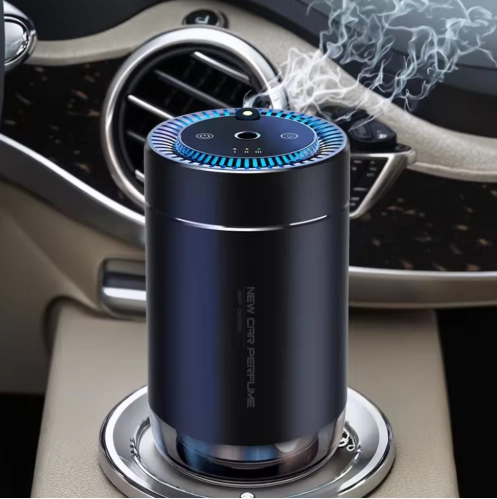
Transform Your Drive: 80ml Rechargeable Car Aroma Diffuser with Starry Sky Top
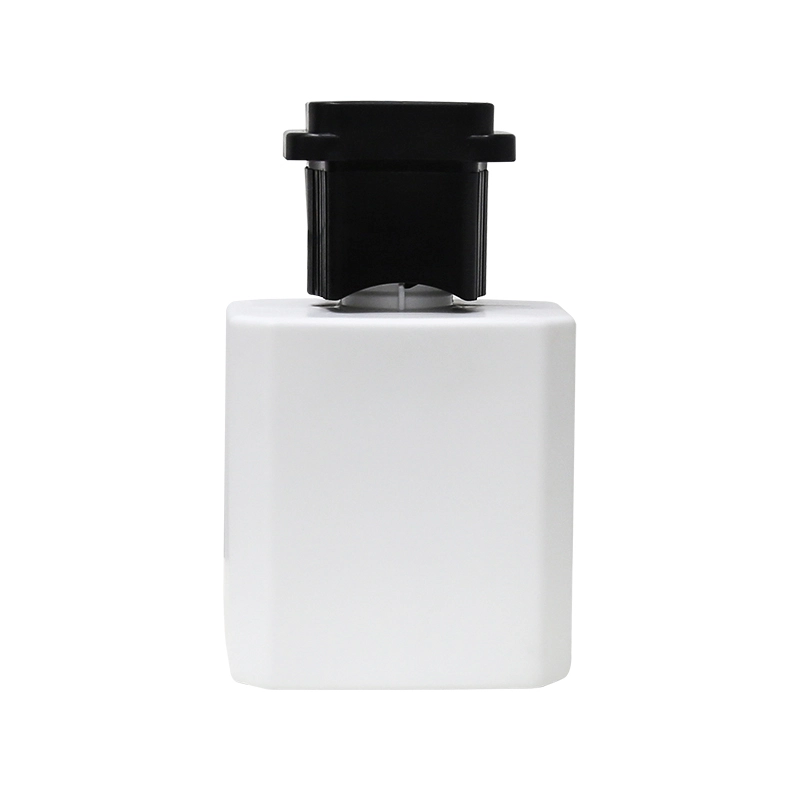
ROI of Saintdeland 816: fragrance machine value for hotels
Wholesale commercial aromatherapy machine manufacturer and supplier
SDL307
What should I do if the fragrance diffuser malfunctions?
If encountering a malfunction, you can first refer to the troubleshooting guide in the product manual; If the issue cannot be resolved, please contact our customer service personnel, and we will provide professional after-sales support.
SDL308
How often do I need to add essential oils?
According to the frequency of use and concentration settings, if the 200ml essential oil warehouse is used normally for 3-7 days, the APP will issue a surplus warning in advance.
About Customization/OEM Service
How long does the customization process take
SDL303
What should I do if the fragrance diffuser malfunctions?
If encountering a malfunction, you can first refer to the troubleshooting guide in the product manual; If the issue cannot be resolved, please contact our customer service personnel and we will provide professional after-sales support.
OEM/ODM Services
What is the minimum order quantity (MOQ) for OEM/ODM?
MOQs vary depending on the product type and level of customization. For most fragrance products, our standard MOQ starts at 1,000 units, but we offer flexible options for pilot runs and new brands.
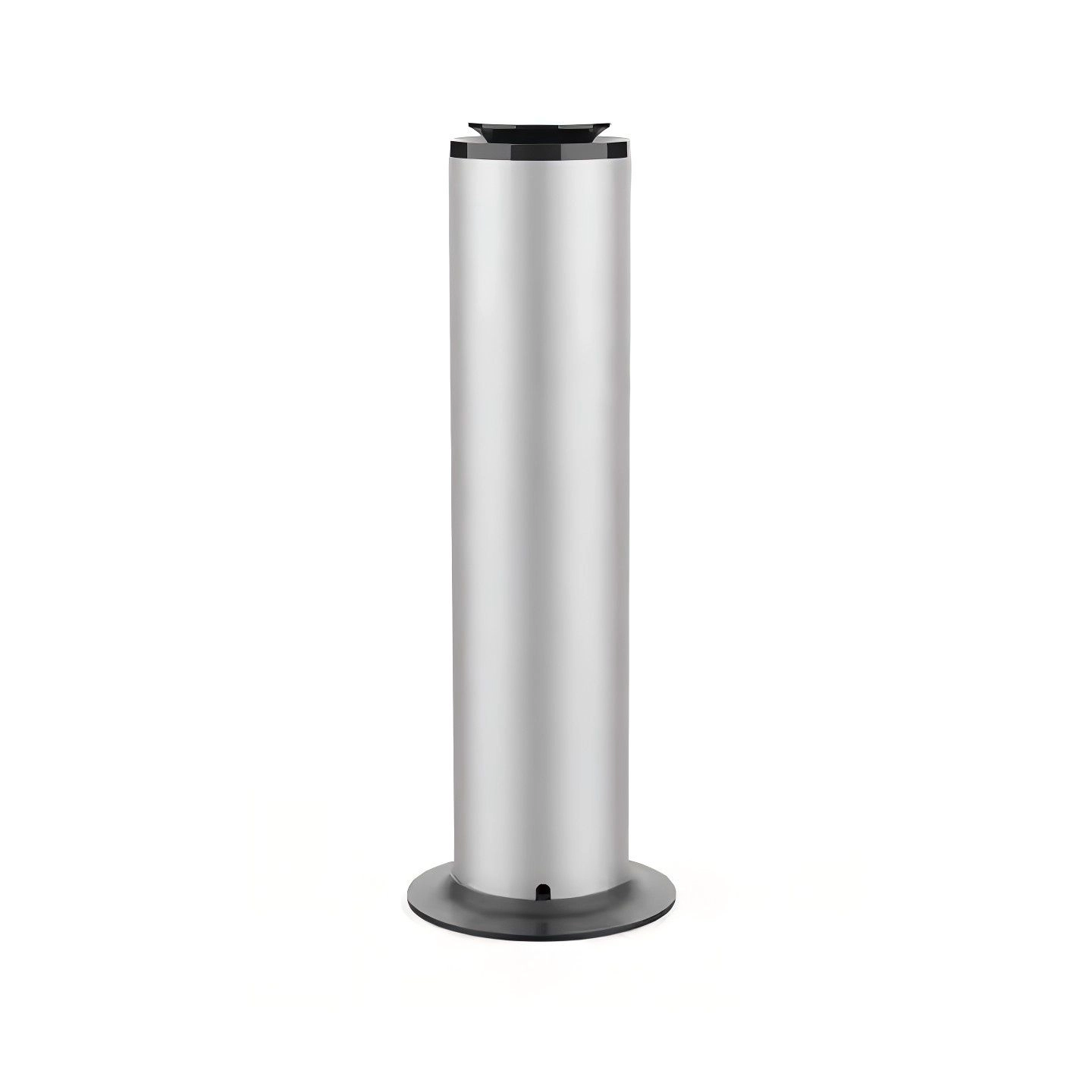
Saintdeland 609 floor standing scent diffuser | household
New Style Metal Smart Home Scent air Machine Electric 120ML Waterless Essential Oil Diffuser Hotel Tower Scent Machine
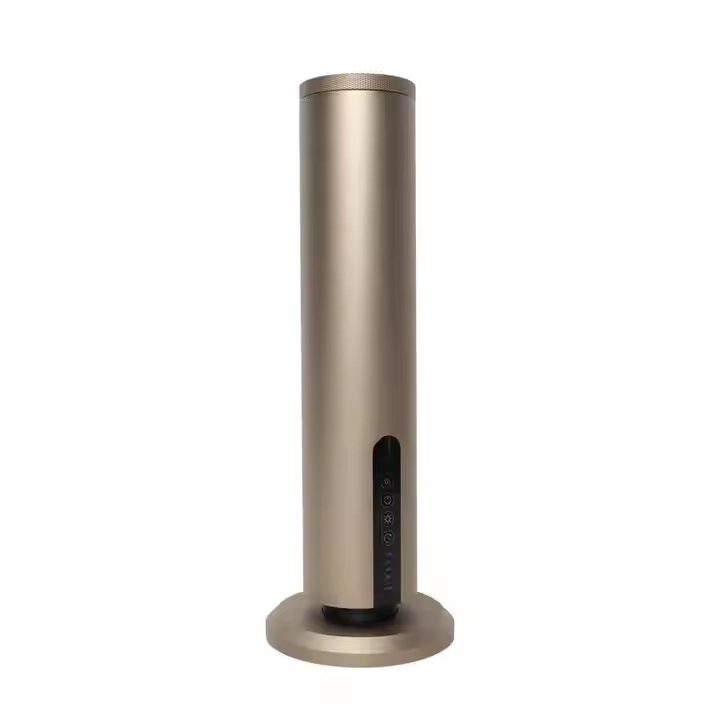
Saintdeland 802 Smart Aroma Diffuser | Bluetooth APP control | sleep aid
Top Sale Portable Wireless Battery Scent Diffuser 100ML Rechargeable Tabletop Essential Oil Home Aroma Diffuser
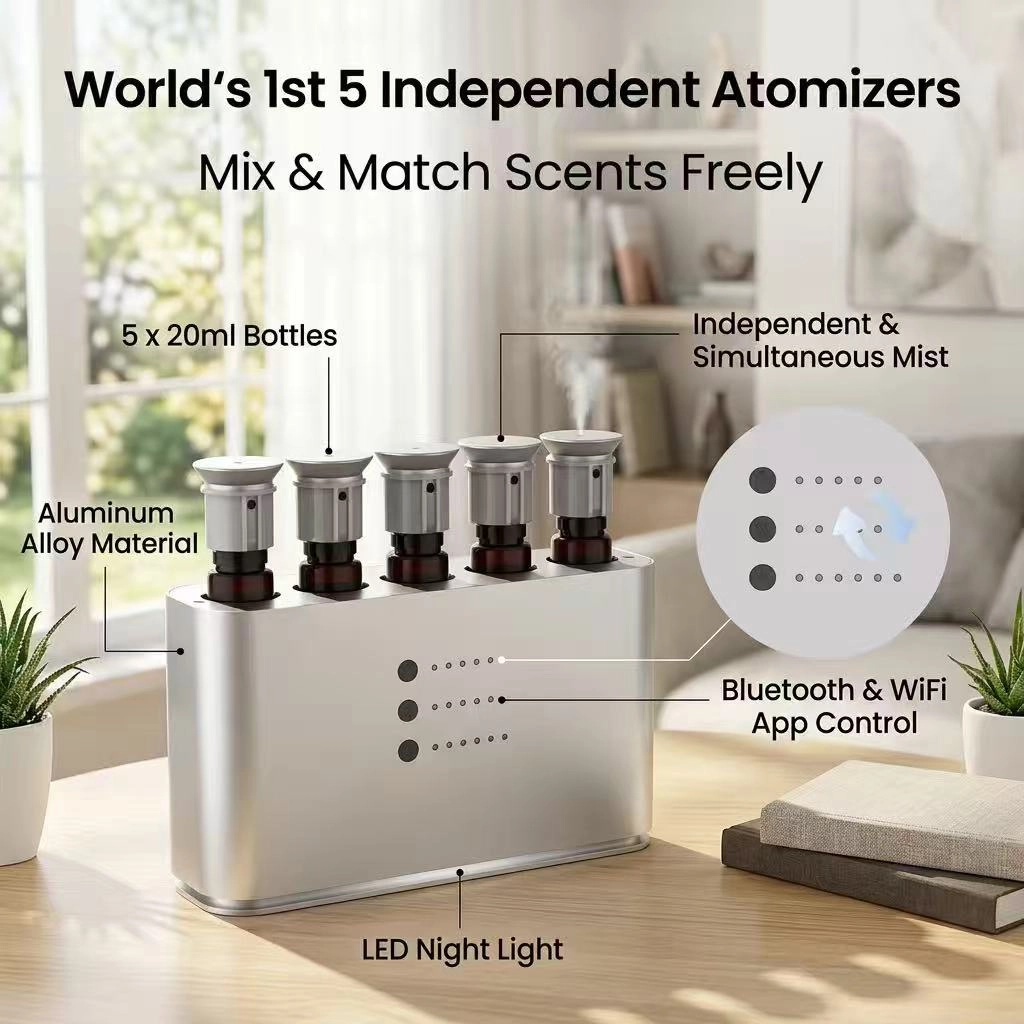
Saintdeland 311 Factory Direct Large Capacity 5-Tank Waterless Electric Essential Oil Diffuser Smart WiFi Control for Hotel Home Use
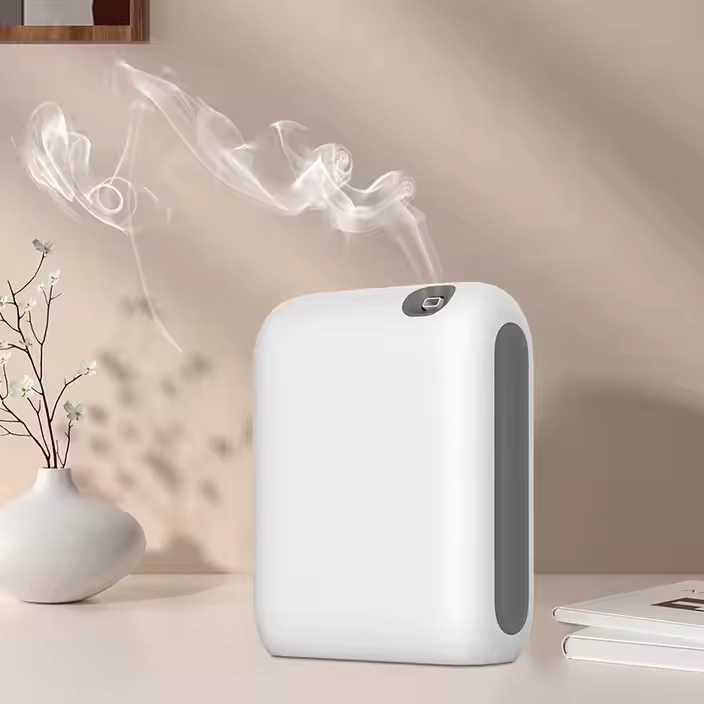
Saintdeland 308 Bluetooth Intelligent Two Fluid Nebulization Diffuser | 400 ㎡+Efficient Coverage Silent Nano level Fragrance Master
The SDL308 intelligent fragrance diffuser innovates the fragrance experience, using two fluid atomization black technologies to instantly transform 200 ml of essential oil into a nano-level fragrance mist, paired with a fan for dual diffusion, immersing a 400-500 square meter space in rich fragrance in seconds.
Through the Bluetooth smart control of the mobile app, concentration adjustment and timed switch can be controlled in one hand to meet personalized fragrance needs. The body is made of environmentally friendly plastic, with a simple white appearance that can be used in various scenarios. The operating noise is less than 35 decibels, which can bring a quiet and high-end olfactory enjoyment whether it is for home rest, office meetings, or commercial space hospitality.
Let's get in touch
Email: huangxiuqing132@outlook.com
Tel: +86 180 1180 4432
WhatsApp: +86 185 9400 4460
Facebook
YouTube
TikTok