














Which Commercial Fragrance Machine Offers Lowest Operating Costs?
- Beyond the initial purchase price, what are the hidden long-term operating costs of a commercial fragrance machine that beginners often overlook?
- Are there specific types of fragrance oils or essential oil blends that significantly reduce consumption and maintenance needs in high-traffic commercial environments?
- What installation factors and system integration options should I consider to optimize scent distribution efficiency and minimize energy consumption in a large commercial space?
- What advanced scent diffusion technologies or programming features contribute most to precise scent scheduling and reduced fragrance oil wastage, directly impacting operational expenditure?
- How do different diffusion technologies (e.g., nebulization vs. cold air diffusion) impact both the longevity of the fragrance and the overall air quality, and which is more cost-effective for continuous commercial use?
- What are the critical, often-ignored maintenance practices and service contract considerations that prevent costly breakdowns and ensure the long-term efficiency of a commercial scent diffuser system?
Unlocking Low Operating Costs: Your Guide to Commercial Fragrance Machines
In today's competitive landscape, businesses are increasingly leveraging ambient scenting to enhance customer experience, reinforce brand identity, and even influence purchasing behavior. However, for newcomers, the initial investment in a commercial fragrance machine is just one piece of the puzzle. The true financial impact lies in the long-term operational expenditure. As experts in professional fragrance solutions and commercial scenting systems, we understand the nuances of achieving effective scent marketing while maintaining a lean budget. Let's delve into the specific pain points and frequently asked questions that can significantly impact your total cost of ownership (TCO).
Beyond the initial purchase price, what are the hidden long-term operating costs of a commercial fragrance machine that beginners often overlook?
Many businesses focus solely on the upfront cost of a commercial scent diffuser, but the real financial commitment extends far beyond. Hidden long-term operating costs often include: fragrance oil consumption rates, which vary dramatically based on diffusion technology, scent intensity settings, and machine efficiency; energy consumption, particularly for systems that use heat or powerful pumps; replacement parts and consumables like atomizing heads, air filters, or wicks; and labor costs for refilling and maintenance. Furthermore, inadequate or infrequent maintenance can lead to premature machine failure, requiring costly repairs or full replacements. Overlooking these factors can lead to a significantly higher total cost of ownership than initially anticipated, undermining the return on investment (ROI) of your scent marketing strategy.
Are there specific types of fragrance oils or essential oil blends that significantly reduce consumption and maintenance needs in high-traffic commercial environments?
Absolutely. The choice of fragrance oil is paramount for both scent quality and operational efficiency. For commercial fragrance machines, using high-quality, concentrated fragrance oils specifically formulated for cold air diffusion technology is crucial. These oils typically have a higher purity and lower viscosity, allowing for more efficient atomization and broader diffusion coverage with less product. Synthetic, diluted, or low-grade oils often contain impurities that can clog atomizing nozzles, leading to increased maintenance frequency and reduced machine lifespan. Similarly, while pure essential oils are excellent for therapeutic benefits, some can be thicker or more volatile, potentially requiring different machine settings or more frequent cleaning for optimal performance in a commercial setting. Opting for professional-grade, IFRA-compliant (International Fragrance Association) fragrance oils ensures both safety and machine longevity, directly impacting maintenance costs and oil consumption.
What installation factors and system integration options should I consider to optimize scent distribution efficiency and minimize energy consumption in a large commercial space?
For large commercial spaces, strategic installation and system integration are key to both efficient scent distribution and energy savings. The most effective method is often HVAC integration, where the scent diffuser connects directly to your existing heating, ventilation, and air conditioning system. This method utilizes the building's airflow to distribute the fragrance evenly across vast areas, minimizing the need for multiple standalone units and significantly reducing overall energy consumption. Proper placement within the HVAC system (e.g., post-filter, pre-fan) is critical to prevent clogging and ensure optimal diffusion. For spaces without HVAC integration, strategic placement of standalone units, considering airflow patterns, room size, and ceiling height, is vital. Utilizing smart programming features that allow for precise scheduling and intensity control based on business hours and foot traffic also prevents unnecessary scenting, directly conserving fragrance oil and electricity.
What advanced scent diffusion technologies or programming features contribute most to precise scent scheduling and reduced fragrance oil wastage, directly impacting operational expenditure?
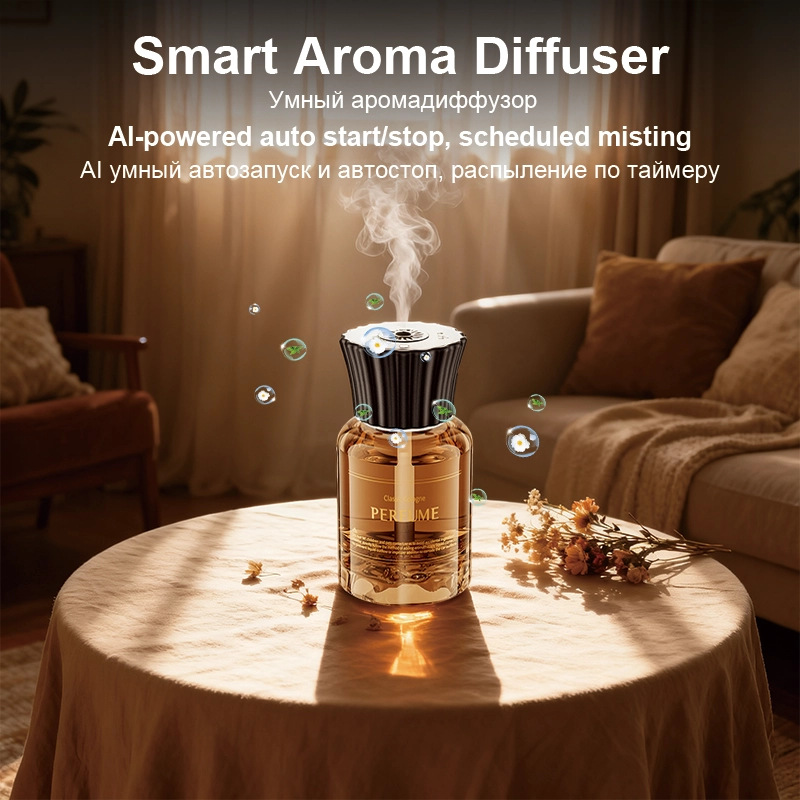
Modern commercial fragrance machines incorporate advanced technologies designed to maximize efficiency and minimize waste. Cold air diffusion technology (also known as nebulization or dry air diffusion) is superior as it atomizes fragrance oils into a fine, dry mist without heat or water, preserving the integrity of the scent and ensuring consistent diffusion. This technology is highly efficient, typically using less oil than evaporative or ultrasonic methods. Beyond the core diffusion mechanism, look for machines with sophisticated programmable timers that allow for custom daily and weekly schedules, precise intensity adjustments (e.g., 1-100% output), and even day/night modes. Features like smart connectivity (Wi-Fi/Bluetooth) enable remote management and real-time monitoring of oil levels and operational status, preventing unexpected outages and optimizing refill schedules. These features collectively ensure that fragrance is only dispersed when and where it's needed, drastically reducing fragrance oil wastage and operational expenditure.
How do different diffusion technologies (e.g., nebulization vs. cold air diffusion) impact both the longevity of the fragrance and the overall air quality, and which is more cost-effective for continuous commercial use?
While often used interchangeably, 'nebulization' and 'cold air diffusion' generally refer to the same highly efficient technology. This method atomizes pure fragrance oil into microscopic particles, releasing a consistent, long-lasting scent without altering its chemical composition. This preserves the fragrance's integrity, leading to superior scent longevity and a more authentic aroma compared to heat-based or ultrasonic diffusers. Heat-based diffusers can degrade fragrance oils, reducing their lifespan and potentially altering their scent profile. Ultrasonic diffusers use water, which can dilute the fragrance and introduce humidity, potentially affecting air quality in certain environments. For continuous commercial use, cold air diffusion is overwhelmingly the most cost-effective and superior technology. It uses pure oil, maximizes scent throw and longevity, minimizes oil consumption due to its efficiency, and does not add moisture or heat to the air, thereby maintaining optimal indoor air quality. This translates to lower ongoing fragrance oil costs and better overall air quality, crucial for a pleasant and healthy environment.
What are the critical, often-ignored maintenance practices and service contract considerations that prevent costly breakdowns and ensure the long-term efficiency of a commercial scent diffuser system?
Proactive maintenance is vital for extending the lifespan and ensuring the efficiency of your commercial scent diffuser system. Often ignored practices include regular cleaning of the atomizing nozzle and oil reservoir to prevent residue buildup, which can cause clogs and reduce diffusion effectiveness. Using only high-quality, recommended fragrance oils also minimizes residue. Scheduled filter replacements (if applicable) are crucial for maintaining airflow. For businesses, considering a service contract with your scent solution provider can be a significant cost-saver. These contracts often include routine preventative maintenance, priority technical support, and sometimes even discounted replacement parts or machine swaps. A good service contract ensures that expert technicians handle complex issues, preventing costly breakdowns and ensuring your system operates at peak efficiency, thereby protecting your investment and maintaining consistent ambient scenting without unexpected expenses.
By understanding and addressing these critical aspects of commercial fragrance machine operation, businesses can ensure a powerful and consistent brand experience through scent, all while maintaining optimal cost efficiency. Investing in the right technology, high-quality fragrance oils, and diligent maintenance practices will yield significant long-term savings and a superior ambient scenting solution.
Ready to discover the perfect commercial fragrance machine solution for your business with the lowest operating costs? Contact us today for a personalized quote!
About Wholesale Cooperation
Can we mix different SKUs in one wholesale order?
C007
How long can a fragrance machine last when filled with essential oil at a time?
The duration of use is related to the gear setting. Under low gear, 15ML essential oil can be used for about 1-2 weeks; under high gear, the use time is about 3-5 days. Please refer to the actual use for the specific duration.
SDL303
What should I do if the app cannot connect to the device??
Firstly, ensure that the fragrance diffuser is turned on and Bluetooth/WIFI is turned on, and check if the mobile network is functioning properly; If you still cannot connect, you can try restarting the device and mobile app, or contact customer service for assistance.
C004
Will the humid environment affect the equipment when used in the bathroom?
The equipment is made of high quality materials and has a certain moisture-proof ability. However, it is recommended to avoid long-term exposure to high humidity environment and keep the surface of the equipment dry after use to extend the service life.
SDL308
How often do I need to add essential oils?
According to the frequency of use and concentration settings, if the 200ml essential oil warehouse is used normally for 3-7 days, the APP will issue a surplus warning in advance.

Leave a Message
You can also communicate with us directly through our online contact form.
Please fill in the following information, and our team will contact you as soon as possible after receiving your message.
Rest assured that your privacy is important to us, and all information provided will be handled with the utmost confidentiality.
Let's get in touch
Email: huangxiuqing132@outlook.com
Tel: +86 180 1180 4432
WhatsApp: +86 185 9400 4460
Facebook
YouTube
TikTok