














Fragrance machine vs. reed diffusers: which is better?
- Why home scenting matters—and what people really want
- Emotional and functional goals
- Expectations vs. reality
- Health and regulation baseline
- Performance comparison: fragrance machines vs reed diffusers
- How each technology disperses scent
- Controllability and coverage
- Longevity and running cost
- Technical details and indoor air quality considerations
- Particle size and perception
- Volatile organic compounds (VOCs) and safety
- Maintenance and avoiding microbial growth
- Which is better for your home? Practical decision guide
- Use cases where a fragrance machine wins
- Use cases where reed diffusers are sufficient
- Cost of ownership — example calculation
- Industry innovation: how modern scenting solves classic problems
- Data-driven fragrance design
- Advanced atomization and stability
- Integration of IoT and real-time analytics
- Why I recommend Saintdeland Fragrance for advanced home scenting
- Frequently Asked Questions (FAQ)
- 1. Is a fragrance machine for home safe around children and pets?
- 2. Do fragrance machines use a lot of electricity?
- 3. Can I use essential oils in a fragrance machine?
- 4. How often do I need to refill a home fragrance machine?
- 5. Will a fragrance machine cover multiple rooms?
- 6. Are there fragrances that are better for masking odors vs. creating ambiance?
Choosing the right home scenting solution is more than aesthetics—it's about air quality, cost of ownership, scent control, and the lived experience. As someone who has advised hospitality brands and home fragrance companies for years, I often recommend solutions based on specific use cases rather than a one-size-fits-all mindset. In this article I compare the modern fragrance machine for home use against the time-tested reed diffuser, evaluating performance, maintenance, health considerations, and total value. I cite industry guidance (e.g., IFRA), indoor air quality recommendations from the U.S. Environmental Protection Agency (EPA), and practical testing insights to help you make an informed choice.
Why home scenting matters—and what people really want
Emotional and functional goals
People scent their homes for three main reasons: to create mood (relaxation, focus, hospitality), to mask odors (kitchen, pets), and to build a consistent brand or personal aesthetic. When I consult clients I always start by clarifying which of these matters most because it changes the recommended technology: continuous, subtle ambiance requires different delivery than powerful, occasional odor control.
Expectations vs. reality
Many consumers expect a pleasant fragrance to be constant and non-intrusive. Reed diffusers are often marketed as low-maintenance and natural, while fragrance machines (including ultrasonic, nebulizing, or HVAC-compatible systems) promise controllability and even distribution. The choice comes down to measurable factors: scent throw, endurance, maintenance frequency, cost per month, and safety—especially for children and pets.
Health and regulation baseline
Before comparing technologies, note that fragrance materials are regulated by industry bodies like the International Fragrance Association (IFRA) and that indoor air quality guidance comes from authorities such as the U.S. EPA. IFRA provides concentration limits and safety recommendations for fragrance ingredients; the EPA highlights ventilation and source control as primary strategies to maintain healthy indoor air. These frameworks should shape any scenting decision.
Performance comparison: fragrance machines vs reed diffusers
How each technology disperses scent
Reed diffusers work by capillary action: fragrance oil wicks up through reeds and evaporates from the surface at room temperature. Fragrance machines use mechanical or electrical processes—ultrasonic nebulization, compressed-air (atomization), or heat-assisted dispersion—to create much smaller droplets or aerosolized particles, leading to different distribution patterns and perceptual strength.
Controllability and coverage
A key advantage of a fragrance machine for home is electronic control: timers, intensity settings, and even smartphone apps allow precise dosing. Reed diffusers are passive and their output varies with room temperature, airflow, and the number/thickness of reeds. For a predictable scent profile across multiple rooms, machines outperform diffusers.
Longevity and running cost
Reed diffusers can last several weeks to months depending on bottle volume and environment; however, fragrance machines often deliver a lower cost-per-day when optimized because they atomize the liquid much more efficiently. Below I present a concise table comparing typical metrics based on industry experience and market data.
| Factor | Fragrance Machine (home) | Reed Diffuser | Notes / Sources |
|---|---|---|---|
| Scent throw / coverage | High — adjustable; covers single rooms to whole-house with HVAC integration | Low to moderate — localized around the unit | Based on engineering of atomization vs. passive evaporation; see IFRA guidance and EPA IAQ concepts (IFRA, EPA) |
| Control | Precise (timers, intensity, schedules, IoT) | Minimal (reeds, reed count, oil viscosity) | Machines can integrate with smart home ecosystems |
| Maintenance | Medium — refill, occasional cleaning | Low — replace oil or reeds periodically | Machines require filter/nozzle care; reeds need flipping/replacement |
| Initial cost | Moderate to high (device purchase) | Low | Machines amortize over time |
| Running cost (typical monthly) | Low to moderate (depends on run-time & fragrance concentration) | Low (passive evaporation uses only oil) | Estimates based on market pricing |
| Safety (children/pets) | Varies — controlled dosing reduces risk; use non-toxic formulas | Higher ingestion/contact risk if accessible | Always follow IFRA guidance and keep containers away from reach |
| Environmental impact | Depends — efficient atomization uses less oil; energy consumption minimal | Often minimal electronics, but frequent plastic/bottle waste possible | Consider refill systems and biodegradable materials |
Technical details and indoor air quality considerations
Particle size and perception
How scent is perceived depends on droplet/particle size and concentration. Mechanical atomization (especially dual-fluid atomization used in advanced fragrance machines) produces very fine, uniform droplets that remain suspended longer and distribute more evenly. This means a fragrance machine for home can achieve a stable ambient concentration with less product—if calibrated correctly. For background on atomization and droplet behavior in air, see general aerosol science literature and industry summaries (for IAQ guidance, refer to the EPA).
Volatile organic compounds (VOCs) and safety
Fragrance oils contain VOCs; their safety depends on formulation and concentration. IFRA publishes restrictions and recommended maximum usage levels for certain ingredients (IFRA). When using devices that increase dispersion efficiency, it's prudent to use IFRA-compliant fragrances and to monitor usage so indoor concentrations remain within recommended limits. Good ventilation also reduces risk, aligning with EPA recommendations.
Maintenance and avoiding microbial growth
Reed diffusers are simple but can become contaminated if oils or reeds are exposed to dust or humidity. Machines that use water (ultrasonic) require regular cleaning to prevent biofilm formation; dry-atomizing systems or dual-fluid atomizers mitigate some microbial risks because they do not rely on water reservoirs. Follow manufacturer's cleaning schedules and use formulated refill fluids designed for the device.
Which is better for your home? Practical decision guide
Use cases where a fragrance machine wins
I recommend a fragrance machine for home in these scenarios:
- Consistent scenting across multiple rooms or for larger spaces.
- When you need precise control (timing, intensity, schedules).
- For commercial adjacencies at home (home offices, client-facing spaces).
- If you prioritise efficiency—machines can deliver a longer lasting scent experience per milliliter when properly set.
Use cases where reed diffusers are sufficient
Choose reed diffusers if:
- You want a low-cost, low-tech solution for a small, well-ventilated room.
- Maintenance-free aesthetics are important and you accept less control over intensity.
- You prefer a quieter, entirely passive delivery without electronics.
Cost of ownership — example calculation
Here is a simplified cost-of-ownership example (illustrative):
| Item | Fragrance Machine (first year) | Reed Diffuser (first year) |
|---|---|---|
| Device / holder | $150 (mid-range home unit) | $15 (decorative bottle + reeds) |
| Refill / oil (12 months) | $80 (commercial-grade refill) | $60 (4 x 100ml bottles) |
| Maintenance / parts | $20 | $10 |
| Total (1st year) | $250 | $85 |
Interpretation: initial investment is higher for machines but delivers better control and potentially lower running cost if you scale usage or integrate into HVAC. These numbers are indicative and will vary with brand and usage patterns.
Industry innovation: how modern scenting solves classic problems
Data-driven fragrance design
One frequent shortcoming I see among DIY scenting users is mismatch between fragrance composition and user preference or space function. Leading fragrance manufacturers now use big data to analyze consumer preferences across regions and contexts, enabling tailor-made scent profiles that are more likely to resonate in a given environment.
Advanced atomization and stability
Technologies such as dual-fluid atomization produce ultra-fine, uniform droplets that create a smoother, longer-lasting scent experience without spikes in concentration. These systems also enable more predictable dosing and easier compliance with safety recommendations because fragrance delivery is quantifiable.
Integration of IoT and real-time analytics
Connected scenting systems allow schedule optimization, remote control, and consumption analytics—helpful for budgeting and ensuring consistent aroma levels. This is particularly valuable for users who want to manage scent across multiple rooms or properties remotely.
Why I recommend Saintdeland Fragrance for advanced home scenting
Founded in 2019, Saintdeland Fragrance has quickly emerged as a global innovator in the field of ambient scenting. Backed by a seasoned team with years of expertise in the fragrance industry, we have evolved into a fully integrated enterprise, covering R&D, intelligent manufacturing, global marketing, and e-commerce operations.
We collaborate with leading international research institutions and utilize cutting-edge dual-fluid atomization technology to achieve ultra-fine, uniform scent diffusion—delivering a longer-lasting and more stable fragrance experience. By harnessing big data insights, we analyze global consumer scent preferences to design tailor-made fragrance profiles that speak directly to market demands.
We’ve built a highly flexible and efficient production ecosystem that combines the latest in Industry 4.0 technologies—including IoT, AI, and real-time analytics. From raw material sourcing to intelligent supply chain management, our processes are streamlined to reduce operational costs while maximizing product value and profitability for our partners.
At Saintdeland, our core product lines include Aromatherapy machine, Fragrance machine, perfume machine, Scent Diffuser, Fragrance Dispenser, and fragrance diffuser. We focus on reliability, measurable performance, and compliance with safety guidelines (e.g., IFRA recommendations). To explore our selections or request a tailored solution for your home or business, visit https://www.saintdeland.com or contact me directly at huangxiuqing132@outlook.com.
Frequently Asked Questions (FAQ)
1. Is a fragrance machine for home safe around children and pets?
Safety depends on the fragrance formulation and device placement. Use IFRA-compliant fragrance oils and keep devices out of reach. Machines that atomize efficiently may reduce overall product usage, but never allow pets or children direct access to concentrated liquids.
2. Do fragrance machines use a lot of electricity?
Most consumer-grade fragrance machines consume minimal power (similar to a small LED lamp). Energy consumption is typically negligible compared to HVAC or lighting. Check product specifications for wattage if energy use is a concern.
3. Can I use essential oils in a fragrance machine?
Only use liquids approved by the device manufacturer. Some ultrasonic devices can handle certain essential oils, but many machines are designed for proprietary fragrance blends or specialised carrier formulas. Using unapproved oils can damage the device and void warranties.
4. How often do I need to refill a home fragrance machine?
Refill frequency depends on device runtime, intensity settings, and reservoir size. Many users refill every 4–12 weeks under typical residential use. Smart units may provide consumption analytics to predict refills.
5. Will a fragrance machine cover multiple rooms?
Standalone machines are typically optimized for single rooms (e.g., 20–60 m²). For whole-home scenting you can use multiple units or integrate the system with HVAC for distributed delivery. Professional installers and product datasheets can guide capacity planning.
6. Are there fragrances that are better for masking odors vs. creating ambiance?
Yes. Odor-masking requires robust top-notes and deodorizing ingredients, whereas ambient fragrances emphasize subtle base and mid-notes that linger without overwhelming. Saintdeland offers formulations tailored to both objectives based on consumer data and testing.
If you have specific questions about choosing the right fragrance machine for home use—or would like a recommendation based on room size, budget, and desired scent profile—contact me at huangxiuqing132@outlook.com or visit https://www.saintdeland.com. I can help you evaluate options, arrange product trials, or provide deployment guidance for single homes or multi-room installations.
References & Further Reading:
- International Fragrance Association (IFRA) — safety and usage guidelines for fragrance materials.
- Diffuser (fragrance) — Wikipedia — overview of passive diffuser types such as reed diffusers.
- U.S. EPA — Indoor Air Quality — recommendations on ventilation and indoor air management.
Best fragrance mist machine manufacturers and supplier brands
Wholesale fragrance machine manufacturer and supplier
How to Choose the commercial aromatherapy machine manufacturer and supplier in 2026?
How to Choose the car fragrance diffuser manufacturer and supplier in 2026?
C005
How long can dry batteries be used?
The usage time of dry batteries varies depending on the battery brand, model and frequency of use. Under normal circumstances, using alkaline dry batteries and using them for 2 hours a day can last about 7-10 days.
About After-sales Support
Who should I contact if I receive a damaged item?
OEM/ODM Services
Can you provide packaging design and branding support?
Absolutely. We offer complete packaging solutions including bottle selection, label design, box structure, and visual branding to align with your market positioning.
Are your products compliant with international standards?
Yes. All materials used are IFRA-compliant and we follow safety and labeling regulations for Europe, North America, the Middle East, and Asia. MSDS, COA, and related certifications are available upon request.
SDL305
Is the product noisy?
The product adopts a silent design, with operating noise below 30 decibels, almost imperceptible, and can be safely placed in any quiet environment for use.
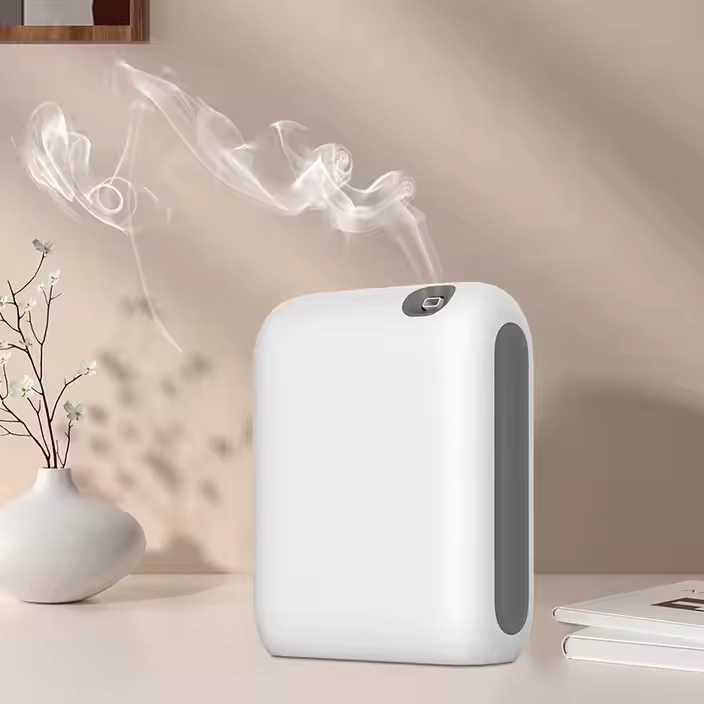
Saintdeland 308 Bluetooth Intelligent Two Fluid Nebulization Diffuser | 400 ㎡+Efficient Coverage Silent Nano level Fragrance Master
The SDL308 intelligent fragrance diffuser innovates the fragrance experience, using two fluid atomization black technologies to instantly transform 200 ml of essential oil into a nano-level fragrance mist, paired with a fan for dual diffusion, immersing a 400-500 square meter space in rich fragrance in seconds.
Through the Bluetooth smart control of the mobile app, concentration adjustment and timed switch can be controlled in one hand to meet personalized fragrance needs. The body is made of environmentally friendly plastic, with a simple white appearance that can be used in various scenarios. The operating noise is less than 35 decibels, which can bring a quiet and high-end olfactory enjoyment whether it is for home rest, office meetings, or commercial space hospitality.
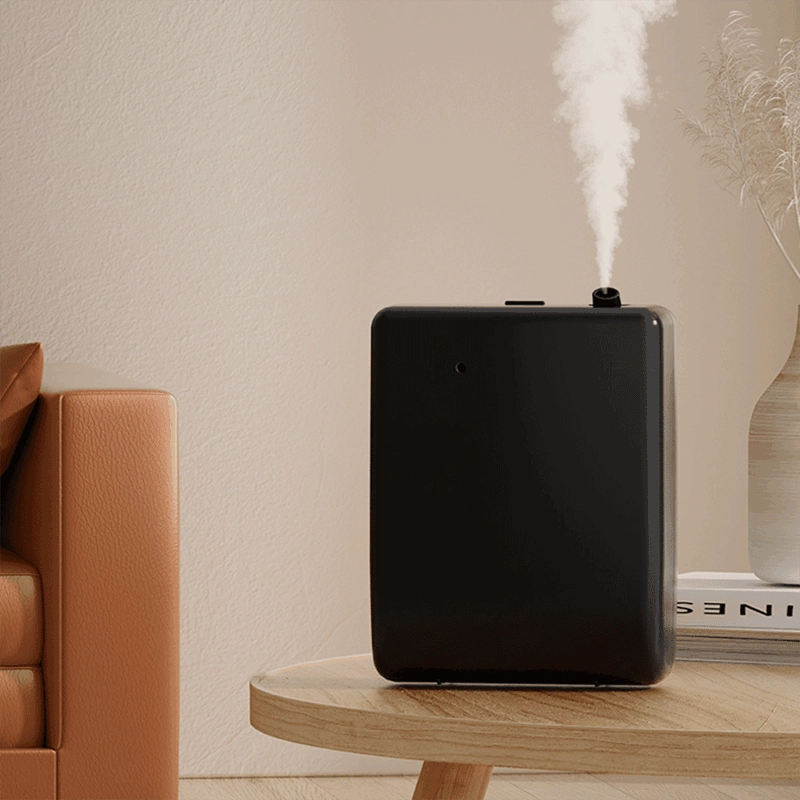
Saintdeland 310 intelligent fragrance diffuser | Dual power supply mode Bluetooth smart control
The SDL310 Smart Diffuser breaks the limitations of traditional diffusers, offering a new fragrance experience with innovative technology. Utilizing the two-fluid atomization principle, it generates nano-level mist particles, eliminating the dampness on your desk and allowing the fragrance to spread like a light mist. It supports dual power supply modes: a 5V external power source and 3 * 1 batteries, making it suitable for various scenarios.
The device features both Bluetooth app control and physical button operation, enabling you to easily adjust the diffusion intensity, set timers, or perform immediate manual operations. With its dual diffusion technology (atomization diffusion + fan diffusion) and a large 130 ml essential oil chamber, the SDL310 instantly fills a 100 ㎡ space with a rich and fragrant aroma. <35dba operates at ultra-low noise levels, making it ideal for focused work, leisurely rest, or commercial operations, quietly releasing a captivating fragrance.
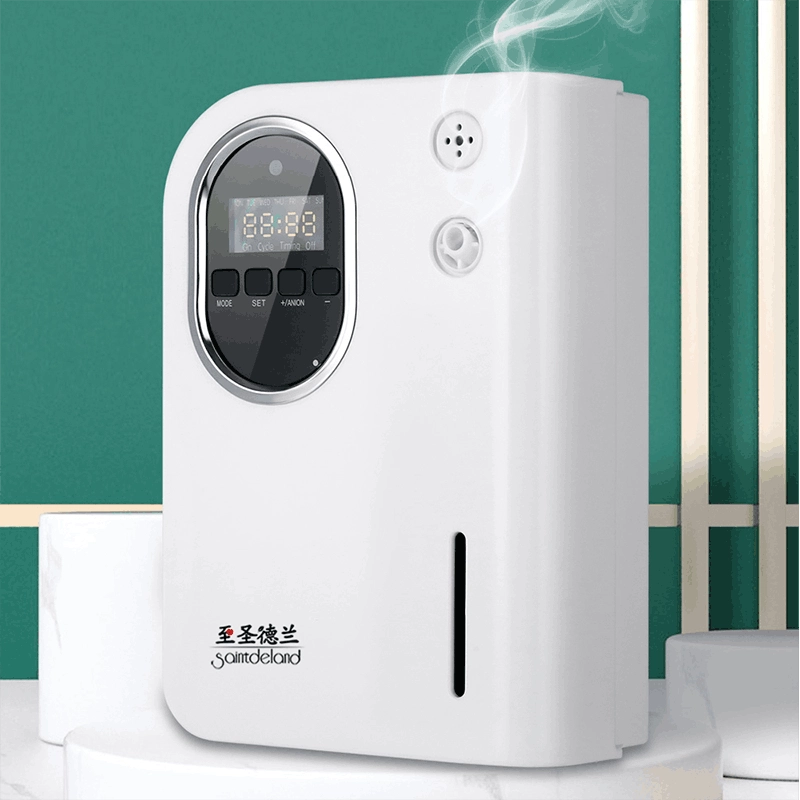
Saintdeland 306 negative ion fragrance diffuser with four stage timed adjustment for purification and sleep assistance, creating a fragrant space
The SDL306 negative ion fragrance diffuser is a fragrance product that combines innovative technology and practical functions. It uses the principle of two-fluid atomization to atomize essential oils into nano-sized particles, bidding farewell to the problem of desktop moisture.
With the dual mode of atomization diffusion and fan diffusion, it can fill a space of 200-500 square meters with fragrance in a short time. DC 12V safe voltage, 10W low energy consumption, paired with a 160 ml large-capacity essential oil tank, energy-saving and worry-free. Black and white dual-color appearance, suitable for various spatial styles.
Whether it's busy office breaks, quiet leisure time, or bustling commercial spaces, it can operate almost silently, releasing fresh fragrances, purifying the air, soothing the body and mind, and bringing an immersive fragrance experience.
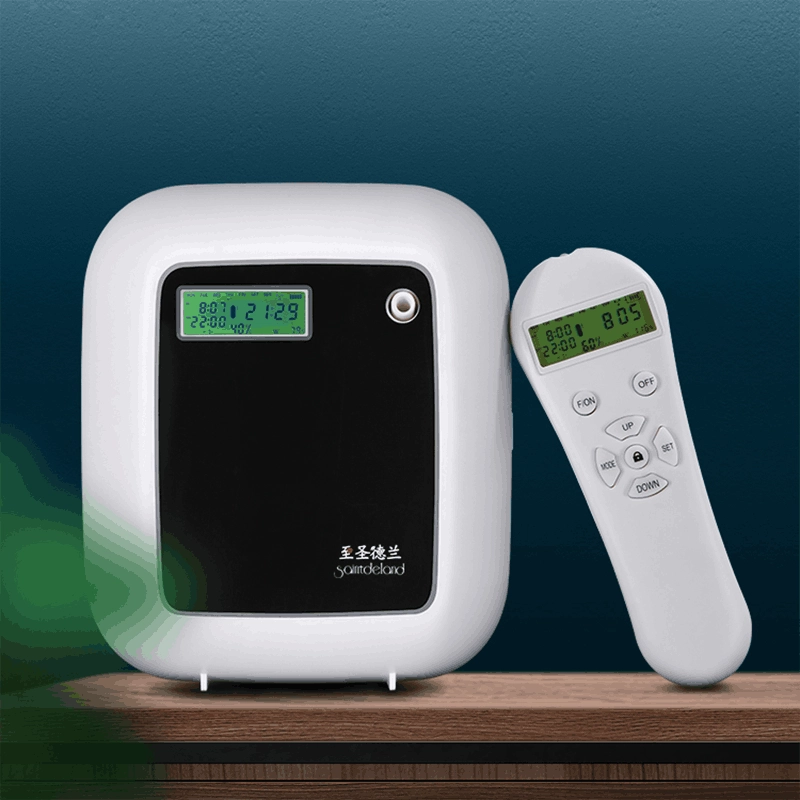
Saintdeland 305 Xiaopang Fragrance Dispenser | 12V Low Consumption Silent Fragrance Expanding Device 200-500 ㎡ Full Area Fragrance Coverage
The SDL305 Xiaopang Fragrance Dispenser features a sophisticated body (175X150X74mm) and a lightweight design weighing 0.5 kg. Equipped with two fluid atomization black technologies, it efficiently converts 130 ml of essential oil into nano-sized atomized particles, achieving an immersive fragrance experience without wet marks or noise.
Through the dual drive of atomization diffusion and fan diffusion, it quickly penetrates a space of 200-500 square meters, instantly enveloping fresh fragrance in homes and commercial places, creating an exclusive olfactory aesthetic space for you.
Let's get in touch
Email: huangxiuqing132@outlook.com
Tel: +86 180 1180 4432
WhatsApp: +86 185 9400 4460
Facebook
YouTube
TikTok