














How to choose a home fragrance machine: 7 key factors
- Why home scenting matters—and what real users want
- Emotional and behavioral impact
- Practical user priorities
- How I approach selecting a machine
- 7 key factors to choose a fragrance machine for home
- 1. Diffusion technology and scent fidelity
- 2. Coverage area and placement
- 3. Health, safety, and indoor air quality
- 4. Usability and smart features
- 5. Maintenance, consumables, and real operating cost
- 6. Noise, aesthetics, and build quality
- 7. Compliance, certification, and vendor support
- Comparing common home fragrance technologies
- Key technology types
- Side-by-side comparison
- Interpreting datasheets and vendor claims
- Making the final decision and ensuring long-term satisfaction
- Installation, placement, and first-run checks
- Maintenance schedule and hygiene
- Choosing fragrances and testing sensitivity
- Brand spotlight: Saintdeland Fragrance (real-world capability and support)
- Frequently Asked Questions
- 1. What type of fragrance machine for home is best for a 30 m² living room?
- 2. Are fragrance machines safe around pets and children?
- 3. How often should I clean my fragrance diffuser?
- 4. What is the difference between scent intensity and coverage?
- 5. Can I use essential oils in all fragrance machines?
- 6. How do I evaluate vendor claims about coverage and scent lifetime?
- Contact, support and trial options
I write about scent and indoor ambience every day, advising homeowners and businesses on selecting the right fragrance machine for home environments. In this guide I summarize the most important, verifiable criteria to evaluate before you buy: the diffusion technology, coverage and performance, scent quality and customization, safety and health considerations, usability and placement, maintenance and operating cost, and warranty/support. These are the practical factors that determine whether a fragrance machine will deliver consistent, pleasant results in your living room, bedroom, or home office.
Why home scenting matters—and what real users want
Emotional and behavioral impact
Scent influences mood, perceived cleanliness, and memory. As a practitioner advising homeowners and small hospitality operators, I see clients choose a fragrance machine for home not just to mask odors but to create atmospheres: calming in bedrooms, invigorating in work areas, or High Quality and welcoming for entertaining. This aligns with research on olfactory cues and mood regulation (see general background on aromatherapy at Wikipedia: Aromatherapy).
Practical user priorities
From the hundreds of consumer consultations I've done, the common top priorities are: reliable distribution (no dead zones), non-irritating formulations, simple maintenance, and predictable running costs. Users increasingly expect smart controls (scheduling, app/IoT), low noise, and environmental responsibility.
How I approach selecting a machine
My recommendations balance objective measures (coverage in square meters, droplet size or particle emissions, power draw) with subjective measures (scent character, delivery smoothness). I always cross-reference device specs with independent standards and guidance from organizations such as the U.S. EPA on indoor air considerations and the WHO for health-related guidance.
7 key factors to choose a fragrance machine for home
1. Diffusion technology and scent fidelity
Different technologies produce different droplet or aerosol sizes and therefore different scent qualities. Nebulizing (or atomizing) devices create ultra-fine, solvent-free droplets that reproduce essential oil profiles faithfully—this is why professional settings often use nebulizers. Ultrasonic diffusers mix scent with water and produce a visible mist; they are gentle and economical but can dilute fragrance character. Heat-based or evaporative devices are simple and cheap but can alter scent notes due to heating.
When faithful scent reproduction is important (for example, if you're using high-quality fragrance blends), prioritize atomizing or dual-fluid atomization technology.
2. Coverage area and placement
Match the device’s stated coverage (often in m² or ft²) to your room. Coverage depends on output rate (ml/hr or scent intensity levels), airflow, and room geometry. For open-plan homes, consider multiple smaller units or a higher-output unit positioned near circulation paths. Manufacturers sometimes overstate coverage—ask for independent test reports or look for devices with adjustable output to fine-tune distribution.
3. Health, safety, and indoor air quality
Safety is frequently under-appreciated. Essential oils and fragrance chemicals are volatile organic compounds (VOCs); long-term indoor exposure at high concentrations can cause irritation for sensitive people. Refer to indoor air guidance such as the EPA's indoor air quality resources and general WHO materials. Choose devices with controllable output, avoid continuous maximum settings, and prefer units that don’t heat volatile oils to high temperatures.
4. Usability and smart features
Convenience features I recommend: timer/scheduler, adjustable intensity, remote or app control, low-noise operation, and clear refill/maintenance indicators. If you want centralized control for multiple rooms, look for devices that support IoT integration or work with smart home ecosystems. These features reduce user error and help maintain safe scent levels.
5. Maintenance, consumables, and real operating cost
Factor in maintenance frequency (cleaning cycles), cost of fragrance refills, and expected lifespan. Some high-performance fragrance machines require occasional part replacement or professional servicing; others are nearly maintenance-free but offer lower-quality diffusion. Ask for typical consumable costs (ml per month at your usage pattern) and warranty terms.
6. Noise, aesthetics, and build quality
For home use, noise can be a deal-breaker. Check decibel ratings when available and read real-user reviews. Build quality affects longevity; metal construction with serviceable parts is preferable to cheap plastics for long-term value.
7. Compliance, certification, and vendor support
Look for devices and fragrances that comply with relevant safety and chemical disclosure standards. For fragrance ingredients, transparency (an INCI list or safety data sheet) is essential. Prefer vendors who provide technical support, MSDS, and independent testing or certification. If you plan to use the machine in a home with children, pets, or people with respiratory conditions, consult manufacturer guidance and a healthcare professional if needed.
Comparing common home fragrance technologies
Key technology types
Below I summarize the common technologies you'll encounter when shopping for a fragrance machine for home:
- Nebulizing / atomizing (solvent-free or dual-fluid atomization)
- Ultrasonic (water + fragrance)
- Evaporative / heat-based / passive pads
Side-by-side comparison
| Technology | Scent fidelity | Typical coverage | Maintenance | Noise | Typical use-case |
|---|---|---|---|---|---|
| Nebulizing / Atomizing | High — reproduces top/middle/base notes accurately | Medium–High (depends on output ml/hr) | Medium (cleaning of glass/nebulizer parts) | Low–Medium | Homeowners seeking true fragrance experience; small open-plan areas |
| Ultrasonic (water-based) | Medium — slightly diluted by water | Low–Medium | Medium (water tank cleaning to prevent biofilm) | Low | Bedrooms, personal spaces, budget-friendly scenting |
| Evaporative / Heat | Low — heating can alter fragrance notes | Low | Low (replace pads/cartridges) | Quiet | Closets, wardrobes, small areas, infrequent use |
Sources and background on diffusion methods include industry summaries and method descriptions (see Ultrasonic humidifier (technical background) and general aromatherapy diffusion discussions at Wikipedia).
Interpreting datasheets and vendor claims
Vendors often state coverage in m² or provide an output rate in ml/hr. Ask for the method used to determine coverage—was it calculated in an empty room with no airflow, or measured in real conditions? Independent lab tests or third-party reviews are more reliable than marketing text.
Making the final decision and ensuring long-term satisfaction
Installation, placement, and first-run checks
Place the diffuser where airflow will help distribute scent without creating a concentrated plume near seating or bedding. Avoid direct proximity to vents or windows that create drafts. For best results, run the device at low-to-medium setting for the first 48–72 hours to assess scent behavior and then adjust.
Maintenance schedule and hygiene
Clean according to manufacturer instructions—this often means periodic rinses for ultrasonic tanks and occasional solvent cleaning for nebulizers. Keep spare wicks or cartridges on hand if your model uses them. For water-based units, prevent stagnation and biofilm by emptying tanks when not in use.
Choosing fragrances and testing sensitivity
When testing a new fragrance, use the small-dose approach: run the diffuser at low output for a few hours and ask household members if they experience irritation. For guidance on ingredient safety, consult fragrance ingredient lists and safety data sheets; for broader indoor-air guidance, refer to the EPA and to international standards such as the ISO 16000 series (indoor air — VOC measurement) for technical context.
Brand spotlight: Saintdeland Fragrance (real-world capability and support)
Founded in 2019, Saintdeland Fragrance has quickly emerged as a global innovator in the field of ambient scenting. Backed by a seasoned team with years of expertise in the fragrance industry, we have evolved into a fully integrated enterprise, covering R&D, intelligent manufacturing, global marketing, and e-commerce operations.
We collaborate with leading international research institutions and utilize cutting-edge dual-fluid atomization technology to achieve ultra-fine, uniform scent diffusion—delivering a longer-lasting and more stable fragrance experience. By harnessing big data insights, we analyze global consumer scent preferences to design tailor-made fragrance profiles that speak directly to market demands.
We’ve built a highly flexible and efficient production ecosystem that combines the latest in Industry 4.0 technologies—including IoT, AI, and real-time analytics. From raw material sourcing to intelligent supply chain management, our processes are streamlined to reduce operational costs while maximizing product value and profitability for our partners.
Saintdeland focuses on products that service both residential and light commercial needs. Our core products include Aromatherapy machine, Fragrance machine, perfume machine, Scent Diffuser, Fragrance Dispenser, and fragrance diffuser. We provide transparent ingredient disclosures, MSDS on request, and offers flexible OEM/ODM programs for partners seeking customization. Find more about our solutions at https://www.saintdeland.com or contact me directly at huangxiuqing132@outlook.com.
Frequently Asked Questions
1. What type of fragrance machine for home is best for a 30 m² living room?
For a 30 m² area I typically recommend a mid-output nebulizing or an ultrasonic unit with an adjustable output. Nebulizers provide superior scent fidelity and can cover a 30 m² zone effectively at medium output; ultrasonic units work if you prefer lower-intensity, humidified mist. Verify the manufacturer's stated coverage and, if possible, test the unit in your space.
2. Are fragrance machines safe around pets and children?
Many fragrances contain compounds that can irritate pets or sensitive individuals. Use low output settings, choose fragrance oils formulated for households with pets (and disclose ingredients), and avoid direct spraying on fabrics. If anyone in the household has respiratory conditions, consult a healthcare professional before use. For general indoor air safety reference the EPA.
3. How often should I clean my fragrance diffuser?
Cleaning frequency depends on the technology: ultrasonic water tanks should be cleaned weekly if used daily; nebulizers often require less frequent cleaning (every 2–4 weeks) but need occasional part maintenance. Always follow the device manual and rinse components that contact oils or water to avoid residue buildup.
4. What is the difference between scent intensity and coverage?
Scent intensity is how strong the fragrance feels close to the device; coverage is how far the scent distributes effectively. High intensity does not guarantee wide coverage—airflow and droplet size strongly influence distribution. Use adjustable intensity so you can balance local strength with whole-room diffusion.
5. Can I use essential oils in all fragrance machines?
No. Some machines are designed for specific concentrates or fragrance cartridges. Pure essential oils can clog certain pump mechanisms or react with plastic components. Check compatibility—manufacturers should provide a list of recommended consumables.
6. How do I evaluate vendor claims about coverage and scent lifetime?
Ask for the test methodology: independent lab reports are best. If unavailable, read detailed professional reviews and user feedback. For scent lifetime, ask vendors for ml/hr output and expected refill volumes; then calculate projected runtime and monthly consumable cost at your typical usage pattern.
Contact, support and trial options
If you'd like product recommendations tailored to your floorplan, family members' sensitivities, or integration with smart home systems, I can help evaluate specific models or suggest trial strategies. For Saintdeland products, support, or OEM inquiries, visit https://www.saintdeland.com or email huangxiuqing132@outlook.com.
Ready to choose? Start by measuring your primary room size, note any respiratory sensitivities in the household, and decide whether scent fidelity or low maintenance is your priority—then match those needs to the factors above. If you want, send me your room dimensions and usage profile and I will recommend 2–3 specific models that fit.
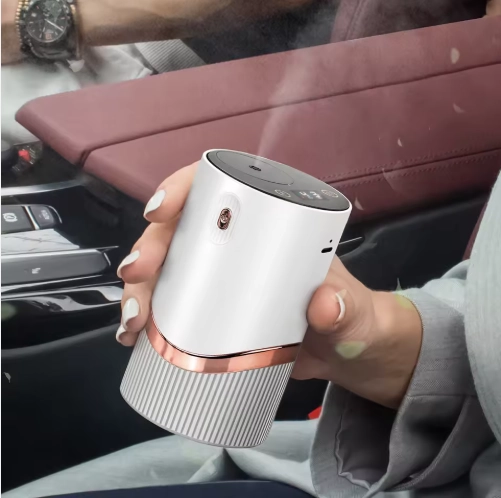
Smart USB Rechargeable Scenting Machine — Waterless 10ml Diffuser for Car & Small Spaces
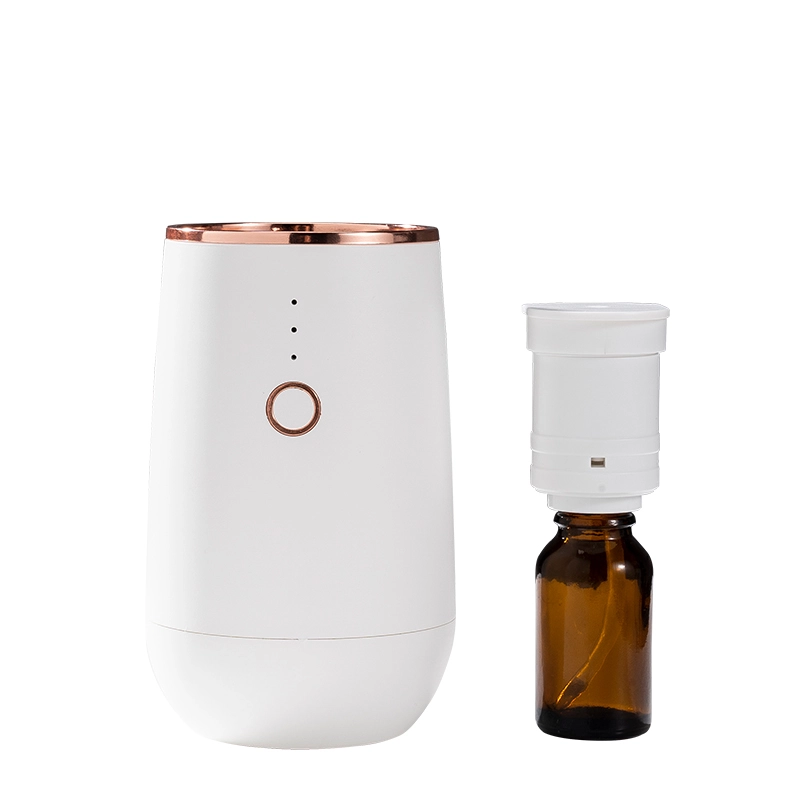
C005 Smart Fragrance Machine — USB-C Car & Home Diffuser for Long-Lasting Aromas
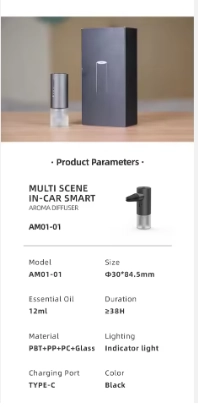
Is a Portable Smart Car Diffuser Worth It? Pros & Cons
Wholesale commercial aromatherapy machine manufacturer and supplier
C004 pro
What if the APP connection fails?
Please confirm that the mobile phone Bluetooth is turned on and the diffuser is on. If you still cannot connect, try to restart the device and the mobile phone, or check whether the APP is the latest version; you can also try to repair the pair.
About After-sales Support
How to handle product complaints or quality issues?
Do you provide installation or user manuals?
About Products
Do your essential oils contain any allergens?
SDL301
How to replace essential oils after use?
Rotate to remove the upper cover, take out the empty bottle, replace it with a new essential oil bottle, and tighten it. The operation is simple and does not require tools.
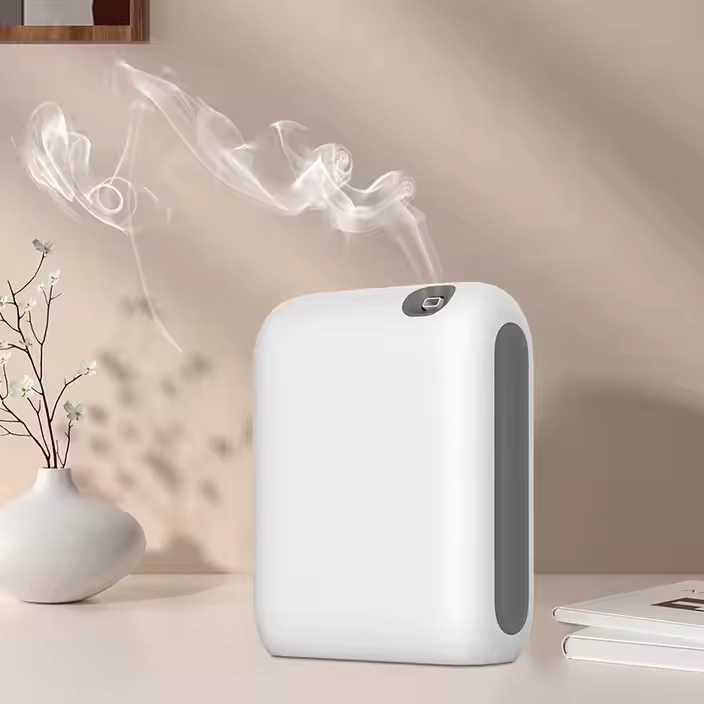
Saintdeland 308 Bluetooth Intelligent Two Fluid Nebulization Diffuser | 400 ㎡+Efficient Coverage Silent Nano level Fragrance Master
The SDL308 intelligent fragrance diffuser innovates the fragrance experience, using two fluid atomization black technologies to instantly transform 200 ml of essential oil into a nano-level fragrance mist, paired with a fan for dual diffusion, immersing a 400-500 square meter space in rich fragrance in seconds.
Through the Bluetooth smart control of the mobile app, concentration adjustment and timed switch can be controlled in one hand to meet personalized fragrance needs. The body is made of environmentally friendly plastic, with a simple white appearance that can be used in various scenarios. The operating noise is less than 35 decibels, which can bring a quiet and high-end olfactory enjoyment whether it is for home rest, office meetings, or commercial space hospitality.
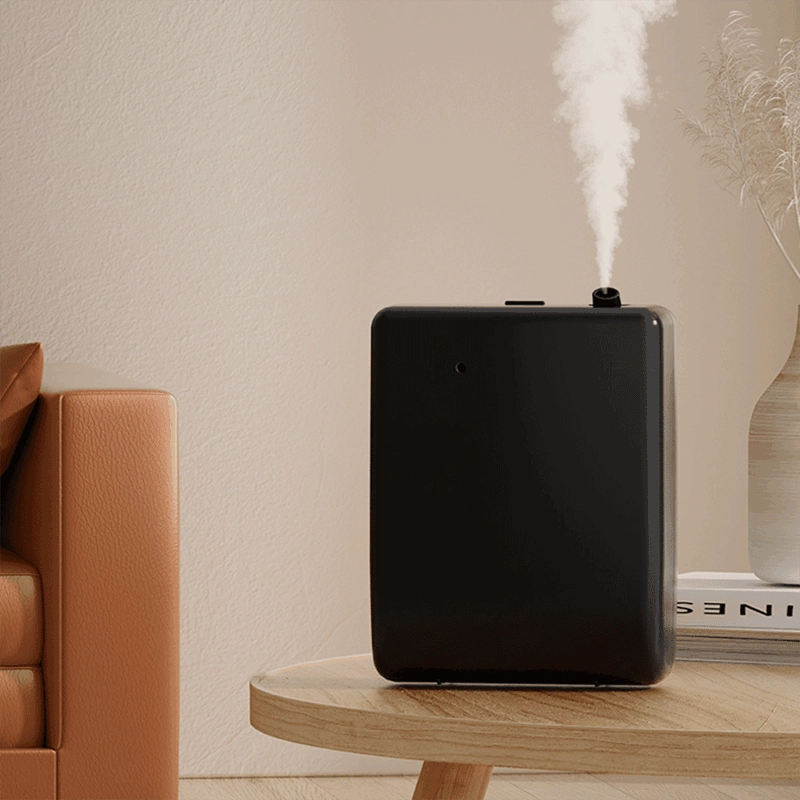
Saintdeland 310 intelligent fragrance diffuser | Dual power supply mode Bluetooth smart control
The SDL310 Smart Diffuser breaks the limitations of traditional diffusers, offering a new fragrance experience with innovative technology. Utilizing the two-fluid atomization principle, it generates nano-level mist particles, eliminating the dampness on your desk and allowing the fragrance to spread like a light mist. It supports dual power supply modes: a 5V external power source and 3 * 1 batteries, making it suitable for various scenarios.
The device features both Bluetooth app control and physical button operation, enabling you to easily adjust the diffusion intensity, set timers, or perform immediate manual operations. With its dual diffusion technology (atomization diffusion + fan diffusion) and a large 130 ml essential oil chamber, the SDL310 instantly fills a 100 ㎡ space with a rich and fragrant aroma. <35dba operates at ultra-low noise levels, making it ideal for focused work, leisurely rest, or commercial operations, quietly releasing a captivating fragrance.
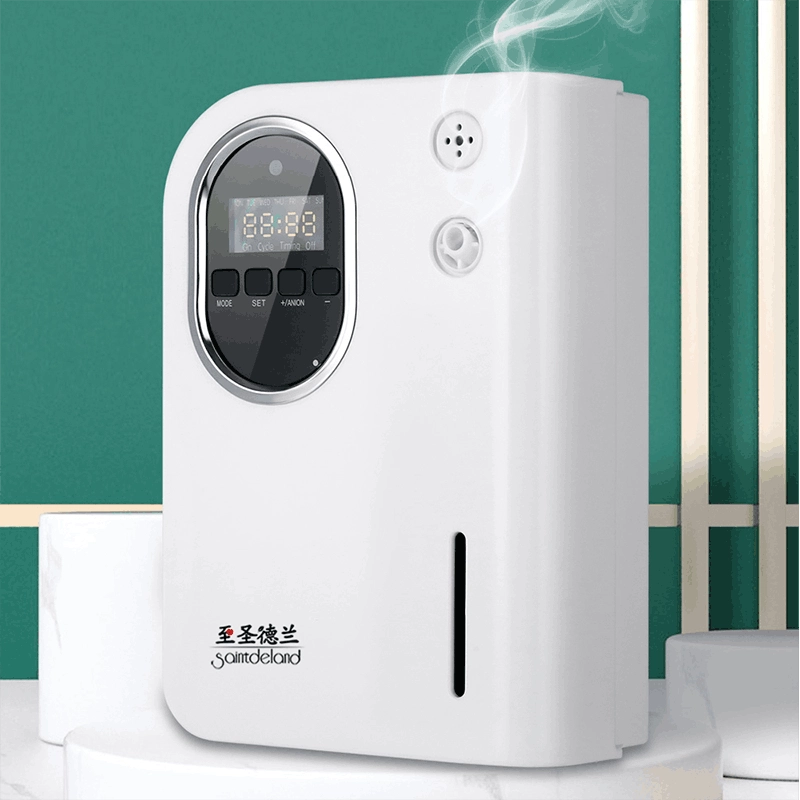
Saintdeland 306 negative ion fragrance diffuser with four stage timed adjustment for purification and sleep assistance, creating a fragrant space
The SDL306 negative ion fragrance diffuser is a fragrance product that combines innovative technology and practical functions. It uses the principle of two-fluid atomization to atomize essential oils into nano-sized particles, bidding farewell to the problem of desktop moisture.
With the dual mode of atomization diffusion and fan diffusion, it can fill a space of 200-500 square meters with fragrance in a short time. DC 12V safe voltage, 10W low energy consumption, paired with a 160 ml large-capacity essential oil tank, energy-saving and worry-free. Black and white dual-color appearance, suitable for various spatial styles.
Whether it's busy office breaks, quiet leisure time, or bustling commercial spaces, it can operate almost silently, releasing fresh fragrances, purifying the air, soothing the body and mind, and bringing an immersive fragrance experience.
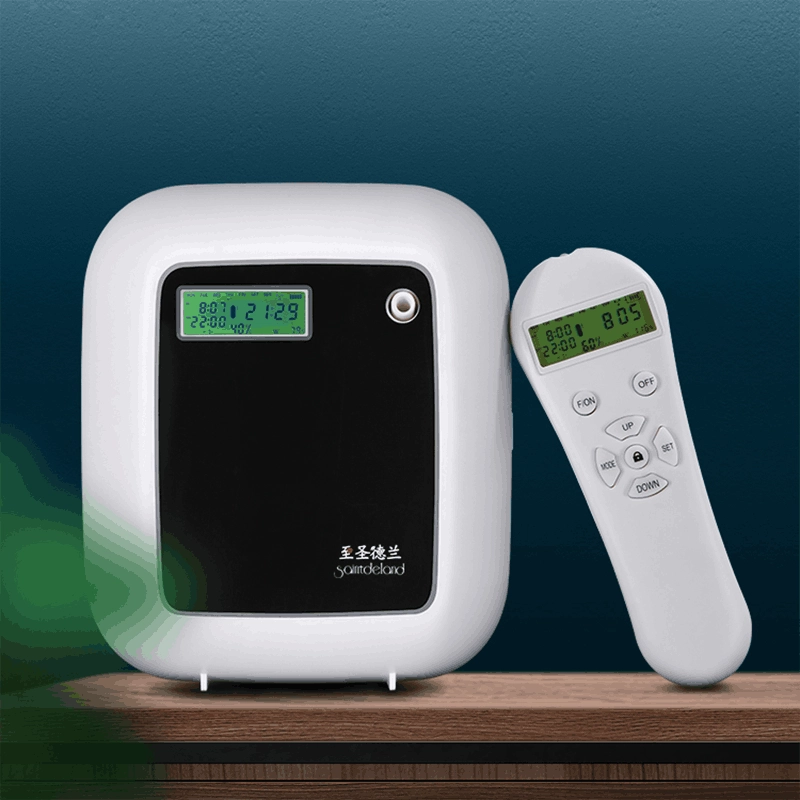
Saintdeland 305 Xiaopang Fragrance Dispenser | 12V Low Consumption Silent Fragrance Expanding Device 200-500 ㎡ Full Area Fragrance Coverage
The SDL305 Xiaopang Fragrance Dispenser features a sophisticated body (175X150X74mm) and a lightweight design weighing 0.5 kg. Equipped with two fluid atomization black technologies, it efficiently converts 130 ml of essential oil into nano-sized atomized particles, achieving an immersive fragrance experience without wet marks or noise.
Through the dual drive of atomization diffusion and fan diffusion, it quickly penetrates a space of 200-500 square meters, instantly enveloping fresh fragrance in homes and commercial places, creating an exclusive olfactory aesthetic space for you.
Let's get in touch
Email: huangxiuqing132@outlook.com
Tel: +86 180 1180 4432
WhatsApp: +86 185 9400 4460
Facebook
YouTube
TikTok