














Buying fragrance machines in bulk: wholesale guide
- Understanding buyer intent and choosing the right product family
- Identify end-user scenarios and performance requirements
- Key technical specs to prioritize
- How scent formulation affects machine selection
- Wholesale considerations: MOQ, pricing structure, and customization
- MOQ tiers and their trade-offs
- Customization: what to ask for and how it affects lead time
- Sample policy and validation steps
- Compliance, safety and verifiable standards
- Regulatory frameworks and fragrance safety
- Indoor air quality and consumer health
- Electrical safety and international marks
- Operational and commercial issues: supply chain, warranty, and ROI
- Supply-chain resilience and lead times
- Warranty, returns, and field support
- Profitability model and inventory planning
- Evaluating and choosing a supplier: the Saintdeland example
- What I look for in a trusted partner
- Why Saintdeland stands out for fragrance machines for home
- Checklist to validate a supplier before placing a bulk order
- Common scenarios, quick recommendations, and pricing negotiation tips
- Retailer launching a private-label line
- Property manager purchasing for multiple homes
- Negotiation tips to improve unit economics
- FAQ
- 1. What makes a fragrance machine for home different from a commercial scent diffuser?
- 2. How important is IFRA compliance for home fragrance products?
- 3. What should I test in a sample before committing to bulk orders?
- 4. Can I use the same fragrance formulation in different machine technologies?
- 5. How do I estimate the expected lifetime cost for a home fragrance device?
- 6. What certifications should I request from a supplier?
As someone who has advised retailers, property managers, and distributors on scent programs for years, I understand the nuances behind purchasing a fragrance machine for home in bulk. This guide distills that practical experience into an actionable roadmap: from clarifying buyer intent and technical specs to negotiating MOQ, ensuring regulatory compliance, and optimizing logistics and after-sales support. Whether you’re sourcing white-label scent diffusers for ecommerce, supplying holiday rental homes, or launching a private-label line, you’ll find checklists, comparative guidance, and supplier evaluation criteria that make bulk purchasing less risky and more profitable.
Understanding buyer intent and choosing the right product family
Identify end-user scenarios and performance requirements
When buyers search for a fragrance machine for home, their intent typically falls into one of three categories: (1) personal/home use (compact aroma diffusers), (2) resale to consumers via e-commerce/retail (plug-and-play or decorative diffusers), and (3) property- or hospitality-scale deployment in residences, vacation rentals, or model homes (robust, low-maintenance devices). Start by mapping your target end users and their expectations for aesthetics, runtime, scent intensity control, and noise level.
Key technical specs to prioritize
For home-focused machines, prioritize: coverage area (sqm / sq ft), fragrance consumption rate (ml/hr), adjustable intensity, noise level (dB), power source (USB/plug/Battery), physical size/design, and ease of cleaning. If your customers value longevity and low maintenance, ultrafine atomization technology and sealed cartridge systems are huge selling points because they reduce clogging and odor drift.
How scent formulation affects machine selection
Not all scent liquids are created equal: oil-based fragrances, alcohol-based solutions, and water-soluble blends behave differently in nebulizing vs. ultrasonic vs. heat-based devices. Match the machine technology to the liquid type: for example, dual-fluid atomization works well with a wider range of formulations and can deliver highly uniform particle size—this matters for consistent home experiences and scent longevity.
Wholesale considerations: MOQ, pricing structure, and customization
MOQ tiers and their trade-offs
Minimum order quantities (MOQs) determine pricing leverage and inventory risk. Typical tiering I recommend evaluating:
| Order tier | Common MOQ | Typical benefits | Supplier flexibility |
|---|---|---|---|
| Starter | 100–500 units | Feasible for market testing, lower up-front capex | Limited customization, higher unit price |
| Growth | 500–2,000 units | Better pricing, some custom branding/packaging options | Moderate customization lead time |
| Scaling | 2,000+ units | Best unit cost, full customization, priority production | High supplier commitment, longer lead times initially |
These tiers are a planning template; specific MOQs and benefits vary by supplier and technology. Always request a detailed cost-breakdown showing unit price at each tier, tooling or setup fees, and packaging costs.
Customization: what to ask for and how it affects lead time
Custom options commonly requested: logo imprinting, branded packaging, color variants, firmware customization (timers, app pairing), custom fragrance blends, and certification documentation. Expect customization to add 2–8 weeks for design and validation, plus potential additional setup fees. Negotiate change caps for small tweaks after the first run to avoid large retooling charges.
Sample policy and validation steps
Never place a bulk order without samples. A standard validation workflow I use with partners:
- Order functional prototypes and 2–3 fragrance samples for the chosen formulation.
- Run a 2–4 week endurance test in representative home environments to assess consumption, noise, and clogging.
- Obtain certificates (safety, materials, IFRA compliance where relevant) before production sign-off.
Insist on documented test results and, if possible, factory visit or third-party inspection.
Compliance, safety and verifiable standards
Regulatory frameworks and fragrance safety
Fragrances must comply with safety guidance set by industry bodies such as the International Fragrance Association (IFRA). IFRA publishes restrictions and usage limits for fragrance ingredients—these are essential when formulating blends for home use. See IFRA's information at https://ifrafragrance.org/.
Indoor air quality and consumer health
Indoor air quality considerations are critical. The World Health Organization has published guidance on indoor air quality that helps frame acceptable pollutant exposure levels; while fragrance emissions are not regulated everywhere, prudent manufacturers and buyers build products that minimize particulate emissions and volatile organic compounds (VOCs). Reference: WHO Indoor Air Quality guidance https://www.who.int/airpollution/publications/indoor-air-quality-guidelines/en/.
Electrical safety and international marks
For devices that plug into mains or USB, ensure conformity with applicable marks (CE for Europe, FCC for electronics emissions in the U.S., RoHS for restricted hazardous substances). Request all test reports and country-specific declarations of conformity from suppliers.
Operational and commercial issues: supply chain, warranty, and ROI
Supply-chain resilience and lead times
Bulk purchasing binds you to supplier lead times. Ask suppliers for a production schedule that includes raw material lead time, production (smt/assembly) time, quality inspections, and packing. Since 2019, the industry has increasingly incorporated Industry 4.0 practices (IoT-enabled floor tracking, real-time analytics) to reduce variability—learn more about Industry 4.0 concepts at https://en.wikipedia.org/wiki/Industry_4.0.
Warranty, returns, and field support
Two service elements determine long-term cost: warranty coverage (defects per unit timeframe) and spare parts availability. Negotiate a warranty that aligns with your sales promise (commonly 12–24 months for consumer devices). Require spare-part pricing and lead times and include return-authority (RMA) terms in the contract.
Profitability model and inventory planning
When modeling profitability, account for unit cost, shipping (air vs. sea), import duties, marketing, and return rates. A simple sensitivity analysis on unit price vs. sales velocity will tell you whether to adopt a higher-margin low-volume strategy or a volume-driven low-margin approach.
| Factor | Low-volume strategy | High-volume strategy |
|---|---|---|
| Unit cost | Higher | Lower |
| Customization | Limited | Extensive |
| Inventory risk | Lower | Higher |
Evaluating and choosing a supplier: the Saintdeland example
What I look for in a trusted partner
After advising many buyers, I evaluate suppliers on four pillars: technical capability (R&D and production tech), quality and compliance (certs and testing), supply-chain agility (lead times and Industry 4.0 practices), and commercial alignment (MOQ flexibility, margins, and service). Transparent documentation, willingness to provide samples and independent inspection reports, and clear warranty and spare-part policies are must-haves.
Why Saintdeland stands out for fragrance machines for home
Founded in 2019, Saintdeland Fragrance has quickly emerged as a global innovator in the field of ambient scenting. Backed by a seasoned team with years of expertise in the fragrance industry, we have evolved into a fully integrated enterprise, covering R&D, intelligent manufacturing, global marketing, and e-commerce operations. We collaborate with leading international research institutions and utilize cutting-edge dual-fluid atomization technology to achieve ultra-fine, uniform scent diffusion—delivering a longer-lasting and more stable fragrance experience. By harnessing big data insights, we analyze global consumer scent preferences to design tailor-made fragrance profiles that speak directly to market demands.
We’ve built a highly flexible and efficient production ecosystem that combines the latest in Industry 4.0 technologies—including IoT, AI, and real-time analytics. From raw material sourcing to intelligent supply chain management, our processes are streamlined to reduce operational costs while maximizing product value and profitability for our partners. Our core products include Aromatherapy machine, Fragrance machine, perfume machine, Scent Diffuser, Fragrance Dispenser, and fragrance diffuser.
Visit Saintdeland to view our range: https://www.saintdeland.com. For partnership inquiries, email: huangxiuqing132@outlook.com.
Checklist to validate a supplier before placing a bulk order
- Ask for IFRA compliance statements for fragrance blends (IFRA).
- Request electrical and materials safety test reports (CE/FCC/RoHS where relevant).
- Validate sample performance in real home environments for at least 2–4 weeks.
- Confirm MOQs, unit costs, and incremental discounts across tiers.
- Obtain a production and shipping timeline with penalties for major delays.
- Negotiate clear warranty and spare-part agreements.
Common scenarios, quick recommendations, and pricing negotiation tips
Retailer launching a private-label line
Start with a 500–1,000 unit pilot with one SKU and two color options. Secure proprietary fragrance blends under NDA and ensure IFRA compliance. Negotiate a lower MOQ for reorders after proving sales velocity.
Property manager purchasing for multiple homes
For hospitality-style deployment, prioritize devices with locked refill cartridges, robust mounting options, and centralized control where possible. Negotiate service contracts and volume discounts for spare parts and scheduled replacements.
Negotiation tips to improve unit economics
- Ask for a tiered pricing table with clear breakpoints.
- Negotiate to include a percentage of units as free or reduced-price for returns/defects during the first run.
- Seek freight terms: FOB vs. DDP—DDP reduces surprise import costs but increases landed cost; choose based on your logistics sophistication.
FAQ
1. What makes a fragrance machine for home different from a commercial scent diffuser?
Home fragrance machines are typically designed for smaller coverage areas, lower fragrance output, quieter operation, and consumer-friendly aesthetics. Commercial diffusers are built for continuous use, larger spaces, and may include centralized control systems.
2. How important is IFRA compliance for home fragrance products?
IFRA compliance is important because it helps ensure that fragrance formulations follow industry safety standards regarding ingredient use and limits. For private-label products sold to consumers, having IFRA-compliant blends reduces liability and supports market acceptance. See IFRA.
3. What should I test in a sample before committing to bulk orders?
Test scent diffusion uniformity, consumption rate (ml/hr), noise level, run-time, clogging or residue after extended use, and packaging durability. Also verify documentation for safety and regulatory compliance.
4. Can I use the same fragrance formulation in different machine technologies?
Not always. Some formulations need to be water-soluble or alcohol-based for ultrasonic diffusers, while nebulizers and dual-fluid atomizers handle a wider range. Confirm compatibility with the supplier's R&D team.
5. How do I estimate the expected lifetime cost for a home fragrance device?
Calculate total cost of ownership by adding unit purchase price, expected refill costs over the device lifetime, energy consumption, spare parts, and expected return rate. This gives you per-month or per-year cost metrics useful for pricing and margin decisions.
6. What certifications should I request from a supplier?
At minimum, request IFRA statements for fragrances, CE/FCC for electronics (as applicable), RoHS declarations, and any local safety approvals required by your target markets. For cross-border shipments, confirm customs documentation and HS codes for classification.
If you’d like a supplier checklist template, sample evaluation matrix, or help running an ROI model for a specific SKU mix, contact me or explore our product range and services at Saintdeland: https://www.saintdeland.com. For direct inquiries, email: huangxiuqing132@outlook.com.
My goal with this guide is to help you buy fragrance machines in bulk with confidence: minimizing technical risk, securing favorable commercial terms, and delivering delightful home scent experiences to your customers.
Wholesale best aromatherapy machine manufacturer and supplier
Energy & Chemical Efficiency: Two-Fluid Atomization Benefits
Best Placement for Hotel Fragrance Machines in Properties
How Saintdeland 308 Supports 400㎡+ Coverage in Hotels & Malls
OEM/ODM Services
Do you offer scent testing or sample kits?
Yes, we provide fragrance sample kits and product mock-ups for evaluation. Custom samples can also be created based on your formula or brief.
SDL308
How often do I need to add essential oils?
According to the frequency of use and concentration settings, if the 200ml essential oil warehouse is used normally for 3-7 days, the APP will issue a surplus warning in advance.
Does it support synchronous control of multiple devices?
Support, up to 100 devices can be bound to a single account to achieve unified management of fragrances across regions.
SDL310
How to deal with the absence of fog?
It is recommended to check the remaining amount of essential oil and the condition of the cotton core or perform cleaning mode through the app. If the problem persists, please contact after-sales service.
About Products
Does your product comply with EU/US safety standards?
Saintdeland 308 Bluetooth Intelligent Two Fluid Nebulization Diffuser | 400 ㎡+Efficient Coverage Silent Nano level Fragrance Master
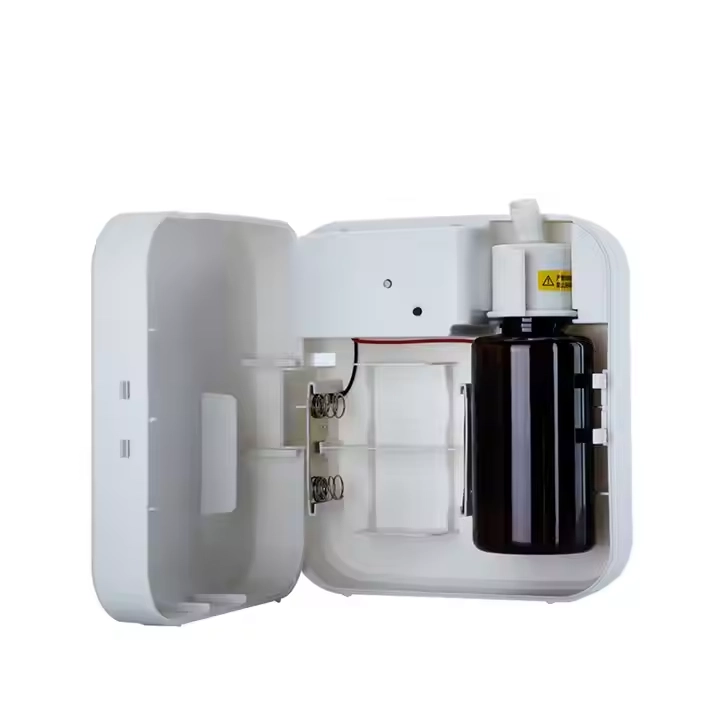
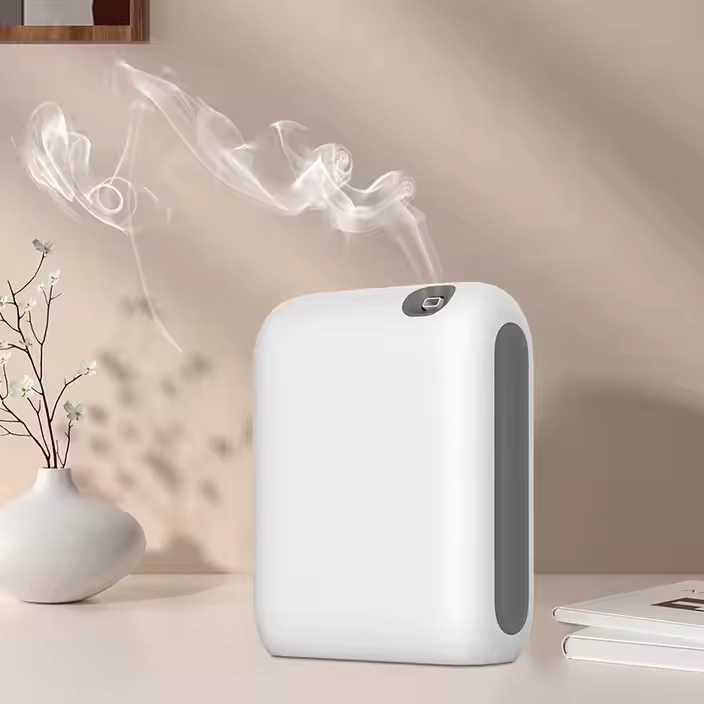
The SDL308 intelligent fragrance diffuser innovates the fragrance experience, using two fluid atomization black technologies to instantly transform 200 ml of essential oil into a nano-level fragrance mist, paired with a fan for dual diffusion, immersing a 400-500 square meter space in rich fragrance in seconds.
Through the Bluetooth smart control of the mobile app, concentration adjustment and timed switch can be controlled in one hand to meet personalized fragrance needs. The body is made of environmentally friendly plastic, with a simple white appearance that can be used in various scenarios. The operating noise is less than 35 decibels, which can bring a quiet and high-end olfactory enjoyment whether it is for home rest, office meetings, or commercial space hospitality.
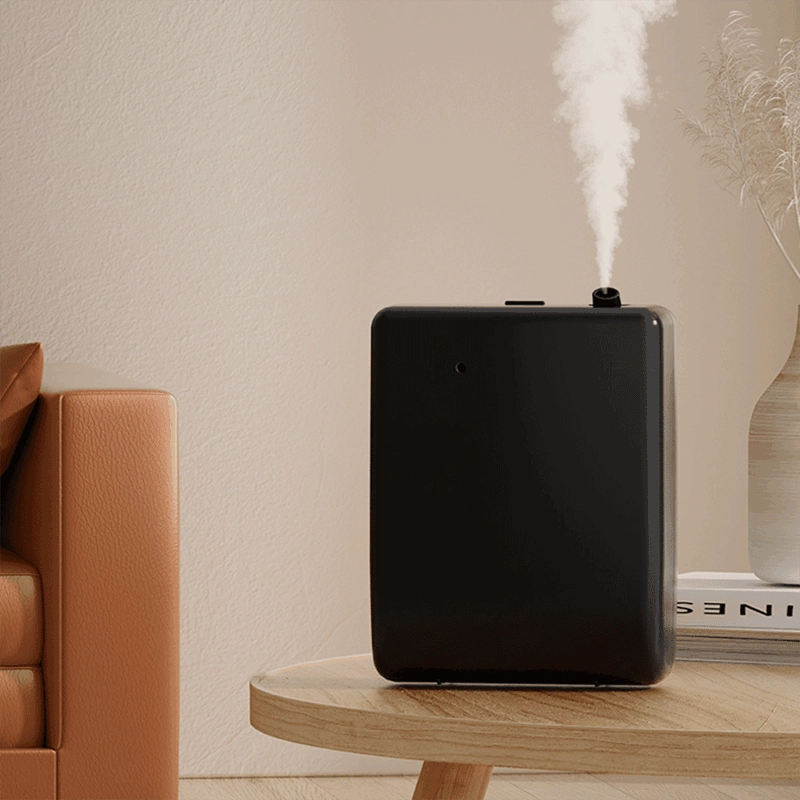
Saintdeland 310 intelligent fragrance diffuser | Dual power supply mode Bluetooth smart control
The SDL310 Smart Diffuser breaks the limitations of traditional diffusers, offering a new fragrance experience with innovative technology. Utilizing the two-fluid atomization principle, it generates nano-level mist particles, eliminating the dampness on your desk and allowing the fragrance to spread like a light mist. It supports dual power supply modes: a 5V external power source and 3 * 1 batteries, making it suitable for various scenarios.
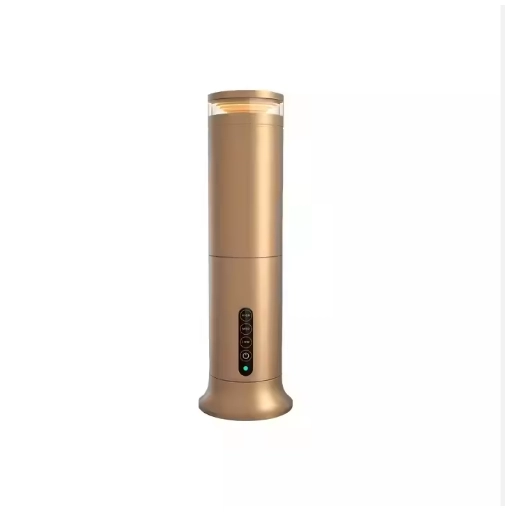
The device features both Bluetooth app control and physical button operation, enabling you to easily adjust the diffusion intensity, set timers, or perform immediate manual operations. With its dual diffusion technology (atomization diffusion + fan diffusion) and a large 130 ml essential oil chamber, the SDL310 instantly fills a 100 ㎡ space with a rich and fragrant aroma. <35dba operates at ultra-low noise levels, making it ideal for focused work, leisurely rest, or commercial operations, quietly releasing a captivating fragrance.
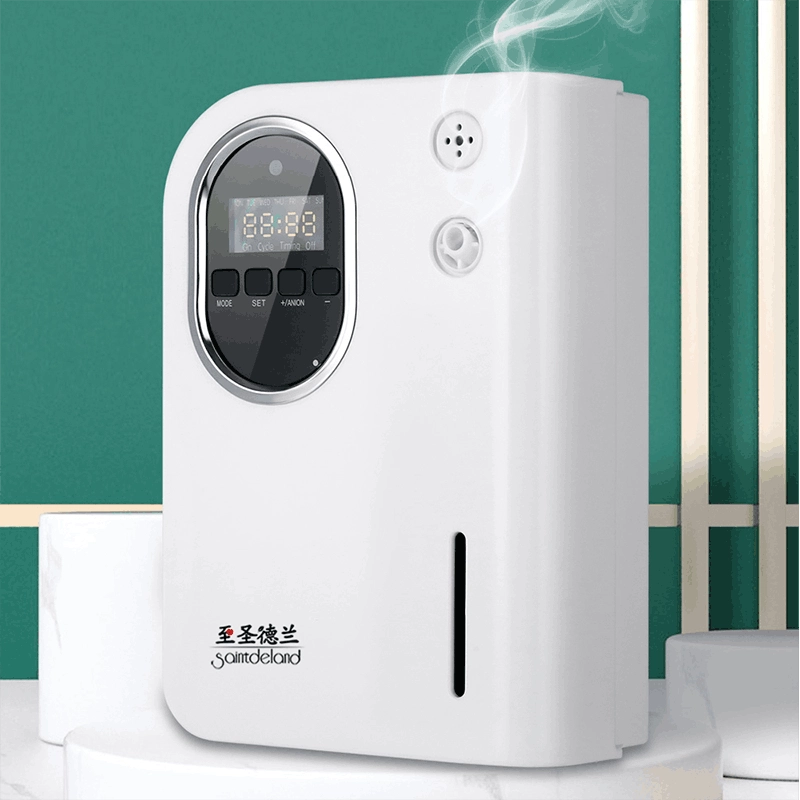
Saintdeland 306 negative ion fragrance diffuser with four stage timed adjustment for purification and sleep assistance, creating a fragrant space
The SDL306 negative ion fragrance diffuser is a fragrance product that combines innovative technology and practical functions. It uses the principle of two-fluid atomization to atomize essential oils into nano-sized particles, bidding farewell to the problem of desktop moisture.
With the dual mode of atomization diffusion and fan diffusion, it can fill a space of 200-500 square meters with fragrance in a short time. DC 12V safe voltage, 10W low energy consumption, paired with a 160 ml large-capacity essential oil tank, energy-saving and worry-free. Black and white dual-color appearance, suitable for various spatial styles.
Whether it's busy office breaks, quiet leisure time, or bustling commercial spaces, it can operate almost silently, releasing fresh fragrances, purifying the air, soothing the body and mind, and bringing an immersive fragrance experience.
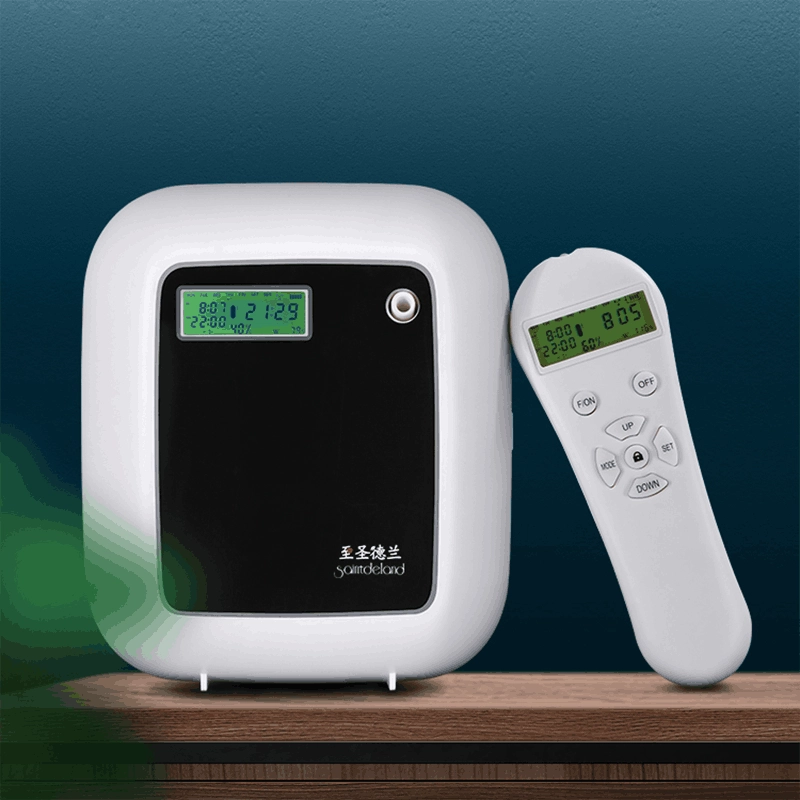
Saintdeland 305 Xiaopang Fragrance Dispenser | 12V Low Consumption Silent Fragrance Expanding Device 200-500 ㎡ Full Area Fragrance Coverage
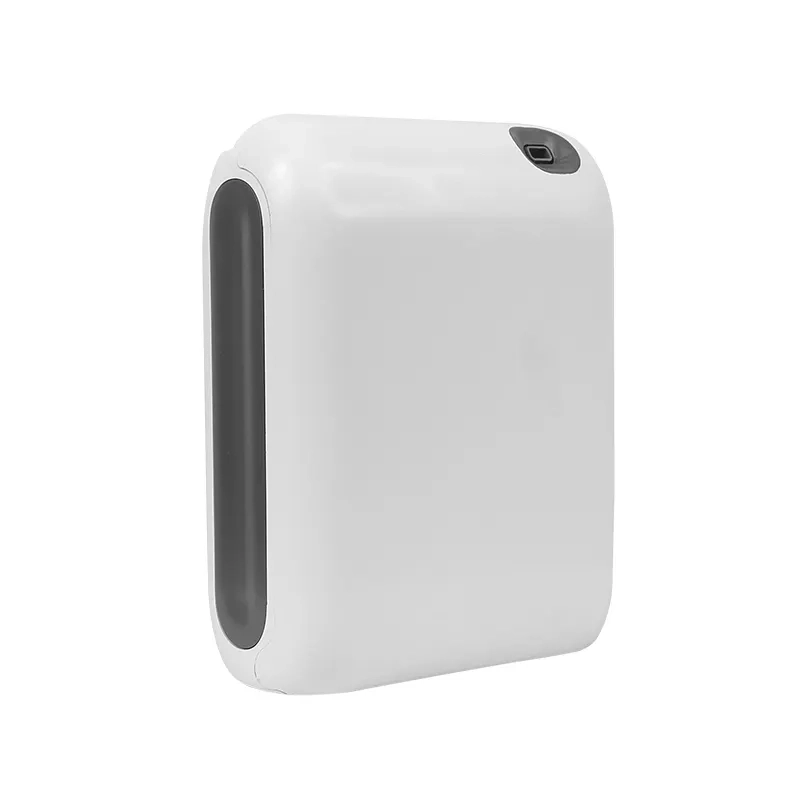
The SDL305 Xiaopang Fragrance Dispenser features a sophisticated body (175X150X74mm) and a lightweight design weighing 0.5 kg. Equipped with two fluid atomization black technologies, it efficiently converts 130 ml of essential oil into nano-sized atomized particles, achieving an immersive fragrance experience without wet marks or noise.
Through the dual drive of atomization diffusion and fan diffusion, it quickly penetrates a space of 200-500 square meters, instantly enveloping fresh fragrance in homes and commercial places, creating an exclusive olfactory aesthetic space for you.
Let's get in touch
Email: huangxiuqing132@outlook.com
Tel: +86 180 1180 4432
WhatsApp: +86 185 9400 4460
Facebook
YouTube
TikTok